

If you’re a nonfiction author, having too many book ideas isn’t necessarily a problem. In fact, it often means you have years of experience, research, knowledge, and stories that could potentially help readers.
Key Takeaways From Too Many Book Ideas? Start Here
- A broad subject isn't necessarily a book concept. Narrow the topic until you can clearly describe what the book is about.
- Identify the one primary reader who needs the book most.
- Ask what your book contributes to the existing conversation and how it differs from what's already available.
- Choose the book that matters right now, rather than trying to write every promising idea at once.
- The strongest book idea sits at the intersection of what matters to you, what matters to your reader, and what you can uniquely contribute.
Start With the Real Problem: Too Many Ideas
When professionals decide to write a book, they often don’t have an idea shortage. They have the opposite problem, too many ideas.
Perhaps you’ve spent years working in your field. You’ve accumulated experience, research, frameworks, lessons, stories, and insights. So when you finally decide to write a book, it can feel as though all of that knowledge needs to make its way onto the page. But it doesn’t.
You cannot fit everything into one book.
You might eventually write several books, but your job right now is to identify the ideas that belong together, then choose the one book that is worth writing first.
How to find your best book idea when you have several strong possibilities?
Start by asking four questions.

The Four Questions You Need to Ask If You Have Too Many Ideas
Is It a Subject or a Book?
One of the easiest ways to get stuck is to confuse a broad subject with an actual book concept. Take leadership.
Leadership is a subject. It isn’t specific enough to tell a potential reader what your book is actually going to help them do.
A book about leadership could become:
Becoming a better leader in a franchise environment
Becoming a better leader in the C-suite
Becoming a better leader on a manufacturing floor
Becoming a better leader in a classroom
The subject remains leadership, but the actual book becomes much more focused. This distinction is crucial for nonfiction authors.
If your idea currently sounds like “a book about leadership,” “a book about marketing,” “a book about parenting,” or “a book about business,” you probably have a subject rather than a book.
Keep narrowing and ask yourself:
What specific problem, question, transformation, or need will this book address?
The narrower concept is much more likely to give you a book you can actually write, and a book a specific reader can recognize as being for them.
Who Needs This Book Most?
Once you’ve narrowed your subject, turn your attention to the reader. Imagine you’re working with leaders across corporations, nonprofits, and education. You might think your book is simply “about leadership.”
But consider what different readers actually need. A teacher leading a classroom of 12-year-olds may face very different challenges from a C-suite executive mentoring future senior leaders.
The foundations of leadership may overlap, but the stories, examples, language, challenges, and myths you address could be completely different.
That’s why one of the most important questions you can ask is:
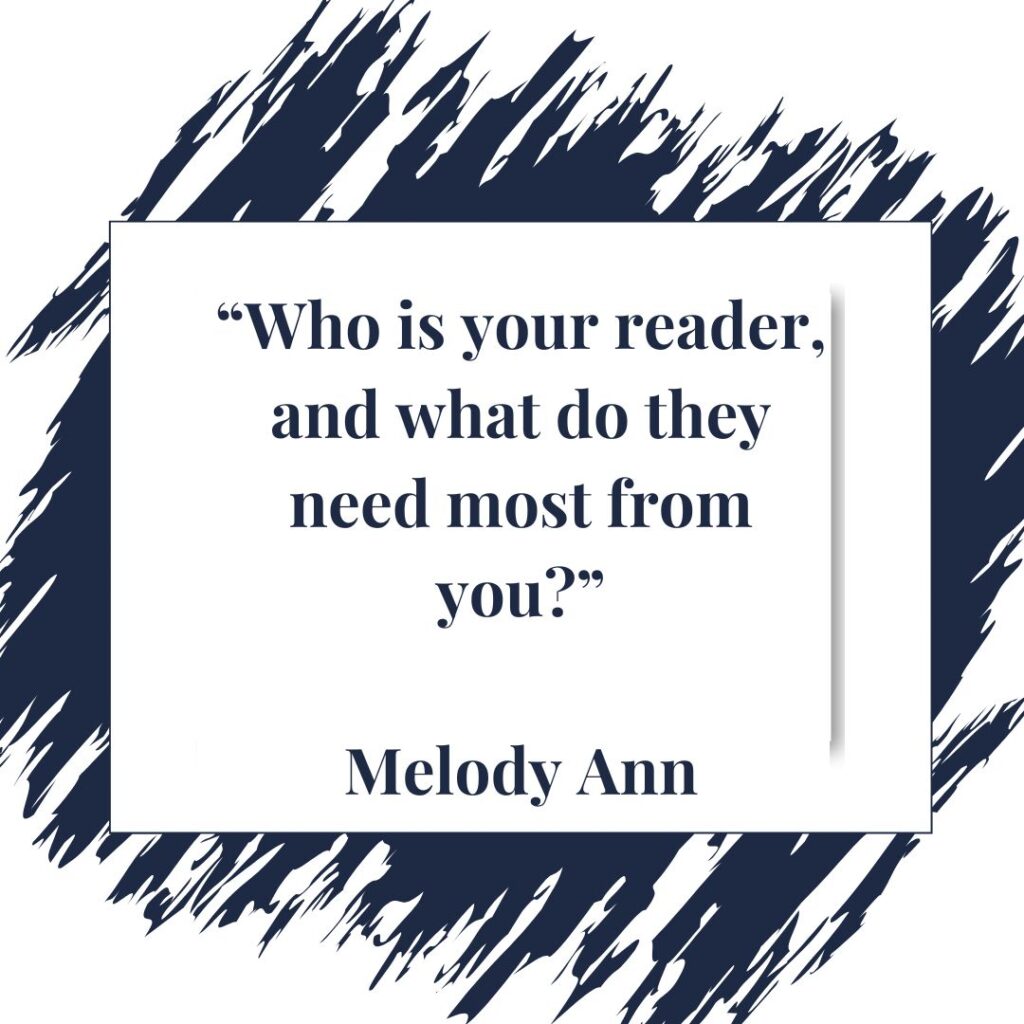
Who is your reader, and what do they need most from you?
Try picturing your ideal reader in a bookstore, they’re standing in front of a shelf, looking for a book. Then they see your title.
They immediately think:
“Yes. This is for me.”
Who is that person? Describe them.
What problem are they trying to solve? What questions are they asking? What do they want? What do they need? What would make your book particularly valuable to them?
Choosing one primary reader doesn’t necessarily exclude everyone else. Instead, it gives the right readers a reason to recognize themselves in your book.
That’s a powerful way to narrow a broad nonfiction idea.
What Can You Contribute?
Your book isn’t being written in a vacuum. There are already conversations happening around your subject. There are other books, experts, ideas, frameworks, and perspectives already available to readers.
So the next question is: What does this book allow you to contribute to the conversation?
Think about the landscape of books already available on your topic.
What has already been said? Where does your idea fit? What is different about your approach? What perspective, experience, research, framework, or insight allows you to add something meaningful?
This becomes especially important when you’re pitching a book to a publisher. Consider the example of a medical doctor who was preparing a book proposal. The publisher wanted the proposed book compared with other books already in the market. That comparison created an opportunity to clarify the book’s contribution.
The proposal demonstrated that while the book belonged in the existing conversation, it wasn’t simply repeating what those other books had already said. It brought something different. The publisher understood the distinction, signed the contract, and gave the author an advance.
The lesson for nonfiction authors is simple:
Don’t just ask whether your topic is interesting. Ask what you uniquely add.
That question can help you determine which of your ideas has the most potential.
How to Know Which Book Idea Has the Most Potential
If you have several strong ideas, you don’t necessarily need to abandon the ones you don’t choose. You might simply need to choose which one comes first.
Think of authors who have written multiple books, writing one book doesn’t mean you’ve committed yourself to never writing another. Your second idea can become your second book, and your third idea can become your third book.
The goal is not to identify the only book you’ll ever write. The goal is to identify the book that matters most right now.
Ask yourself:
Which book matters to my reader right now?
Which idea connects most closely to the work I’m doing right now?
Which book supports the goals I’m pursuing?
Which idea feels timely?
Which book will I still care about when the writing gets difficult?
Which idea am I most likely to stay committed to through the messy middle?
That last question matters.
Writing a book takes sustained attention. Once you’re deep into the manuscript, other ideas can suddenly become very attractive. The shiny new idea starts calling.
If you’ve chosen the book that genuinely matters to you and your reader right now, you’re more likely to stick with it.
Your Next Step If You Have Too Many Ideas, Start Here!
If you’re still sitting with several possible book ideas, don’t force yourself to choose based solely on which one sounds most interesting.
Put each idea through the four questions in this post. Your answers should make the strongest candidate much easier to see.
But remember! Choosing one book doesn’t mean giving up the others. You’re simply choosing the book you’re going to write first. So, where are you right now?
Are you struggling because you have no idea what to write about, or because you have too many book ideas and don’t know how to sort them out?
How the ideas in this discussion can help you!
Implementing these ideas can help you move from overwhelm to clarity in your author journey. Instead of trying to cram years of expertise into one book, you can identify a focused concept, understand exactly who the book is for, clarify what makes your perspective valuable, and choose the idea that matters most right now.
That can make the difference between endlessly thinking about writing a book and actually committing to one book and moving forward.
3 Quick Actions To Help You Decide On A Topic
1. Turn your subject into a book concept — 3 minutes
Write down your broad topic, then narrow it by completing:
“This book will help [specific reader] ______.”
2. Define your primary reader — 5 minutes
Picture one person who desperately needs this book. Write down their biggest problem, question, and desired outcome. This gives you a clearer target for your content.
3. Rank your book ideas — 5 minutes
List your top 3 ideas and score each from 1–5 on:
Matters to my reader now
Connected to my current work
Offers a unique contribution
I can stay committed to it
The idea with the strongest overall score may be the book that’s worth writing right now.
Register for our workshop series on this topic later today! Which Book Is Worth Writing? | Author Odyssey
Recent Articles

Why Your Content Isn’t Working Together
October 1, 2026
No Comments
Learn how to build a Content Ecosystem From Your Expertise where your book, podcast, newsletter, workshops, and other content each have a clear purpose and

You Already Have the Material for Your Book
September 17, 2026
No Comments
Before you sit down to write thousands of new words, take a closer look at what you’ve already created, you may discover that you already

Write Your Own Book Without Writing It Alone
September 10, 2026
No Comments
Write Your Own Book Without Writing It Alone, explore four ways to bring your nonfiction book to life, from independent writing to professional support, collaboration,