
Learn how to build a Content Ecosystem From Your Expertise where your book, podcast, newsletter, workshops, and other content each have a clear purpose and work together to serve your readers, and your author journey.
Key Takeaways From Create a Content Ecosystem From Your Expertise
- A book, podcast, newsletter, course, and workshop don't automatically create a content ecosystem.
- Each format should have a specific job and a clear relationship to the others.
- Your book can provide the foundation for your ideas without having to contain everything you know.
- More content can mean more work, not necessarily a stronger ecosystem.
- The goal is to create a Content Ecosystem Built Around Your Expertise that serves both your audience and your broader goals.
Build a Content Ecosystem From Your Expertise
As a nonfiction author, you probably have more ideas than you could ever fit into a single book. But you may also have a newsletter, podcast, YouTube channel, workshops, courses, articles, or other ways of sharing your expertise.
Here’s the important question: Are all those pieces actually working together?
You could have a book, a course, a newsletter, a podcast, and a YouTube channel and still not have a coherent content ecosystem, you might simply have five different media formats competing for your time and attention. That can quickly become exhausting.
Your Content Needs Different Jobs
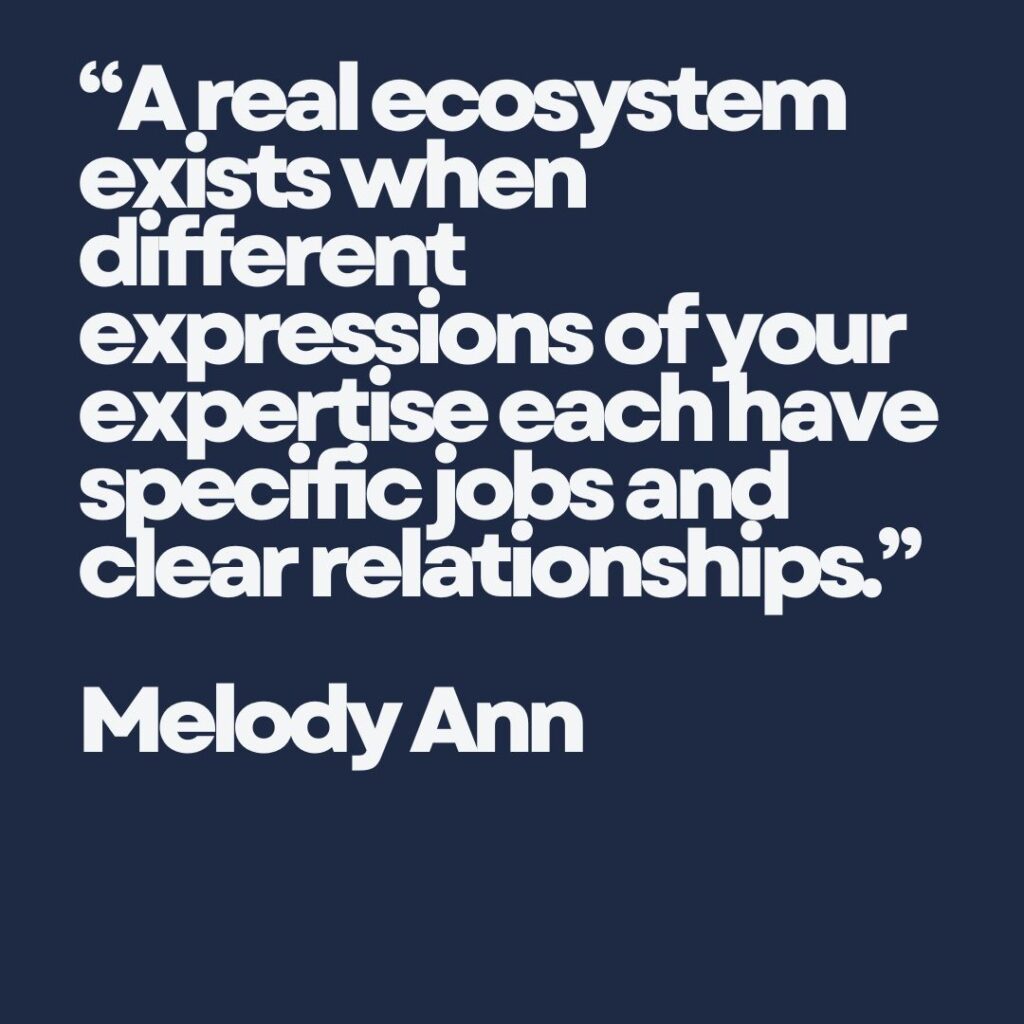
A content ecosystem isn’t defined by how many formats you use. It’s also not about taking one article and mechanically turning it into multiple pieces of content. Instead, a real ecosystem exists when different expressions of your expertise have specific jobs and clear relationships.
For a nonfiction author, your book might provide the foundation, it could introduce the central framework or body of thinking that shapes your work. Your podcast, on the other hand, might explore stories and real-world examples that help readers understand how those ideas apply in different situations.
A workshop could help people actually put those ideas into practice, and a course could take the process further by teaching an idea, giving people an opportunity to apply it, answering their questions, and then helping them build additional capacity.
The important thing is that these aren’t random pieces of content, they’re connected. They’re helping your audience move from understanding an idea to applying it.
Ask What Each Format Is For
One of the simplest ways to evaluate your content ecosystem is to look at each piece and ask:
What is this content doing?
What is your book doing?
Why does it exist?
If you have a newsletter, what can you put in the newsletter that the book can’t do? If you run a workshop, what’s happening there that couldn’t simply be written as an article?
These questions help you identify whether each format has a meaningful role and for nonfiction authors, this is particularly important because your expertise is the foundation of everything you create. You don’t want to scatter one idea across multiple platforms simply because you feel like you “should” be creating content everywhere.
Instead, think about how each format can express a different dimension of your expertise.
Why Your Content Isn't Working Together
If you have one idea appearing everywhere in essentially the same form, you may not be building an ecosystem, you may simply be creating more maintenance.
Every new format can become an obligation, and the more formats you add, the more content you may feel responsible for creating, updating, and maintaining.
That doesn’t necessarily support your goals, or your audience’s goals. More content doesn’t automatically mean a stronger ecosystem, sometimes it simply means more labor.
For example, if you have an evergreen article that provides foundational information, you don’t necessarily need to keep changing that article every time you have a new thought. Those ongoing updates might be better suited to a newsletter or podcast.
The foundational piece can remain foundational while your more dynamic content carries the newer ideas and developments.
Your Book Doesn’t Need Everything
As a nonfiction author, it can be tempting to think your book needs to contain everything you know. It doesn’t.
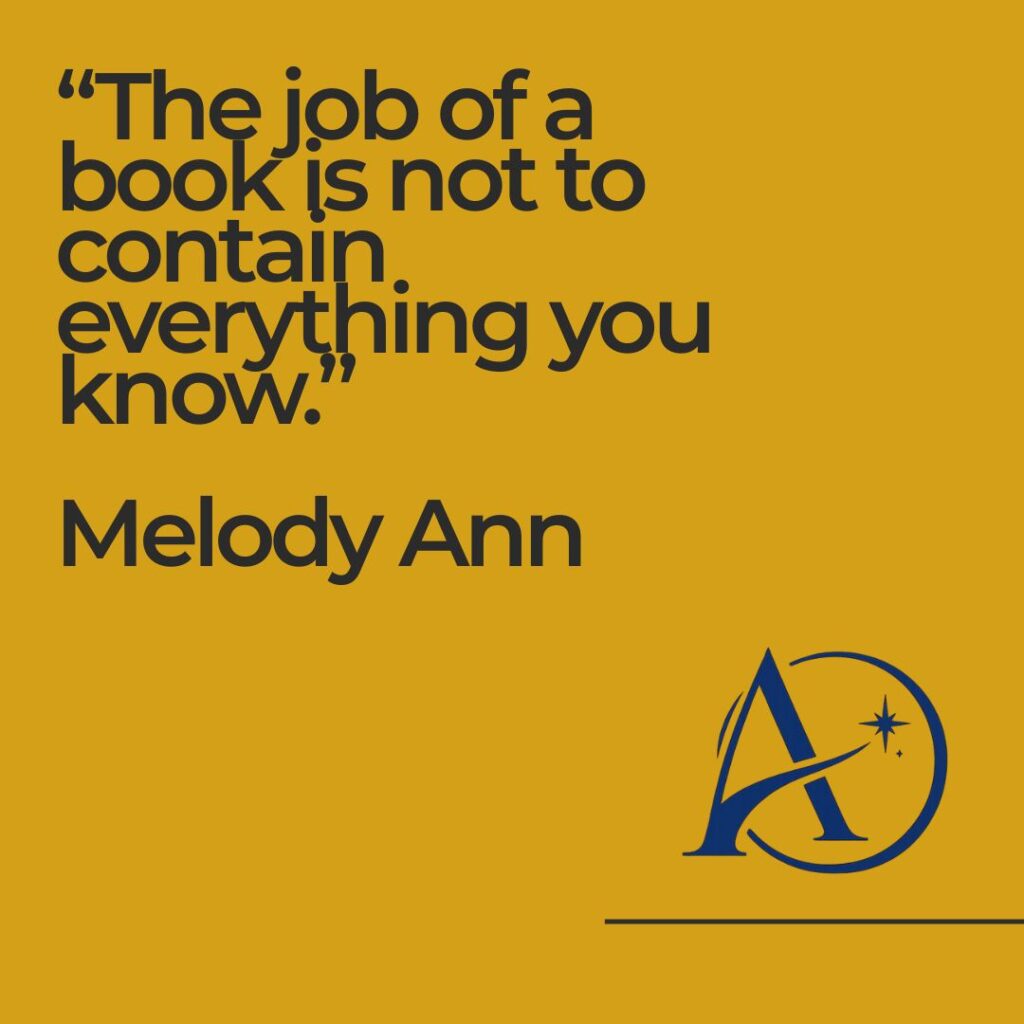
The job of a book isn’t to capture your entire body of expertise. A book can be a place where your audience comes to think deeply, reflect, and give their full attention to an idea. It gives you room for context, deep thinking, and stories.
That makes the book excellent foundational content, but it doesn’t have to be your only content. In fact, trying to put everything into one book can make the book less effective.
Some ideas may get buried.
Some stories may work better elsewhere.
Some concepts may be better experienced through a workshop where readers can actively apply them.
Let Different Formats Do Different Things
Instead of trying to force everything into your book, consider what other formats can do better.
A workshop can help people apply an idea to their own lives.
A podcast can allow you to tell stories and demonstrate how your ideas work in different scenarios.
A newsletter can provide ongoing thoughts, updates, and conversations around your core ideas.
Your book can remain the foundation while these other formats extend and deepen the work. You don’t need to write five books just because you have five different collections of stories.
There may be another format that serves those stories better and your book should be one part of the body of your work, not all of it.
Build Around Your Expertise
The goal isn’t to create content simply for the sake of creating more content. The goal is to build a Content Ecosystem From Your Expertise.
Start by asking:
If someone wants more depth, where do they go?
If someone needs to apply an idea, where can they do that?
If someone needs to reflect on an idea, which format gives them the space to do that?
If someone wants stories and examples, where can they find them?
What does each format provide that the others don’t?
When you answer those questions, your content starts to become a connected system rather than a collection of disconnected projects. That’s the difference between simply producing more content and building a body of work.
The Question to Ask Next
Take a look at everything you’re currently developing. Your book, newsletter, podcast, and videos, workshops, and courses.
Then ask yourself:
What am I creating that isn’t actually serving me or my audience?
You may discover that one of your formats doesn’t need to exist, or you may discover that an existing piece of content has a much more valuable role when you connect it to the rest of your work. The objective isn’t to be everywhere, it’s to make your expertise work together in a way that serves your audience, your business, and the body of work you’re building as a nonfiction author.
How this helps your author journey
This information can help you make your author journey more focused, sustainable, and purposeful. Instead of treating your book, newsletter, podcast, workshops, or other content as separate obligations, you can give each one a clear role within your overall body of work.
Less content overwhelm: You don’t have to put everything you know into your book, or create every possible type of content. Each format can do a different job.
A stronger body of work: Your book can establish the foundation of your framework, while other formats help readers apply, explore, or revisit those ideas.
More intentional writing: Asking “What is this content doing?” helps you decide whether an idea belongs in the book, a newsletter, a podcast, a workshop, or somewhere else.
Less unnecessary maintenance: Not every piece of information needs to live in an evergreen book. Time-sensitive updates can live in formats that are easier to change.
Better reader support: Your audience can find different levels of engagement, depth and reflection in the book, application in a workshop, and stories or examples in a podcast.
A more sustainable author business: More content isn’t automatically better. A thoughtful ecosystem can help you avoid creating additional work that doesn’t serve you or your audience.
3 Quick Actions To Help You Make Your Content Work For You
1. Audit one piece of content — 3 minutes
Pick one thing you’re currently creating and ask:
“What job is this content doing?”
Write down its purpose in one sentence. If you can’t identify a clear purpose, flag it for review.
2. Map your three main formats — 5 minutes
Write down your book + two other content formats. Beside each, complete:
“This format helps my audience ______.”
Look for overlap. If all three have the same answer, consider whether one could serve a different purpose.
3. Find one idea that doesn’t belong in the book — 3 minutes
Look at your book ideas and identify one story, example, update, or application that would be better suited to a newsletter, podcast, workshop, or course. Move it to that format rather than forcing it into the manuscript.
The bigger change: Your book doesn’t have to contain everything you know. It can be the foundation of your expertise, while the rest of your content helps your audience apply, explore, and deepen those ideas.
Keep an eye out for the next episode!
Recent Articles
Why Your Content Isn’t Working Together
October 1, 2026
No Comments
Learn how to build a Content Ecosystem From Your Expertise where your book, podcast, newsletter, workshops, and other content each have a clear purpose and

You Already Have the Material for Your Book
September 17, 2026
No Comments
Before you sit down to write thousands of new words, take a closer look at what you’ve already created, you may discover that you already

Write Your Own Book Without Writing It Alone
September 10, 2026
No Comments
Write Your Own Book Without Writing It Alone, explore four ways to bring your nonfiction book to life, from independent writing to professional support, collaboration,