
Book Publishing Paths Explained:
Discover how to pick the right publishing path and determine the right book publishing strategy before you even start writing.
Listen on Your Favorite Podcast Platform
Book Publishing Paths Explained: Key Takeaways
- Each publishing path, traditional, self, and hybrid, serves a different purpose, and none is inherently better than the others.
- The goal is to determine the right book publishing strategy based on what you want your book to achieve.
- Your decision should reflect: The level of control you want, the resources you’re willing to invest, and the audience you want to reach.
- Understanding the pros, cons, and trade-offs of each path helps you make a more confident decision.
- Be aware of potential pitfalls, especially with hybrid publishing, to avoid costly mistakes and misleading offers.
- Your publishing choice should always align with your book’s purpose, not just industry trends.
How to Pick the Right Publishing Path
In this guide, Book Publishing Paths Explained, we’ll walk through your options so you can determine the right book publishing strategy for your goals, your audience, and your long-term vision.
If you’re a nonfiction author wondering how to pick the right publishing path, you’re not alone. This is one of the most important, and often overwhelming, decisions in the entire writing journey.
Today’s publishing landscape offers more options than ever before. From traditional publishing to self-publishing, hybrid models, and emerging digital approaches, authors now have more control and opportunity than at any point in history. But with that freedom comes a new challenge: figuring out which path is actually right for your book.
Why Choosing the Right Publishing Path Early Matters
Many nonfiction authors wait until their manuscript is complete before thinking about publishing. But in reality, your publishing decision should happen much earlier in the process.
The path you choose directly influences how you write your book. When you have clarity from the beginning, your content becomes more focused, your structure more intentional, and your message more aligned with your audience.
Instead of writing aimlessly and figuring things out later, you begin with direction. You understand what you’re building toward, and every chapter serves that outcome. This shift alone can dramatically improve both the quality of your book and your overall author experience.
Traditional Publishing: A Path of Credibility and Reach
Traditional publishing is often seen as the most established route. In this model, you partner with a publishing house that takes on the responsibility of editing, designing, printing, and distributing your book.
For many authors, the biggest appeal lies in the credibility and support that comes with this partnership. A traditional publisher brings industry experience, established relationships, and access to wider distribution channels, which can help your book reach a larger audience.
However, this path is highly competitive. Publishers receive thousands of submissions and accept only a small percentage. For nonfiction authors, this typically means submitting a detailed book proposal rather than a finished manuscript. It also means giving up a degree of creative control and being prepared for a slower publishing timeline.
This path is best suited for authors who prioritize authority, reach, and professional backing over speed and independence.
Self-Publishing: Freedom, Speed, and Full Ownership
Self-publishing, also known as independent publishing, offers a completely different experience. In this model, you take full control of the entire publishing process, from writing and editing to design, pricing, and marketing.
This level of ownership can be incredibly empowering. You’re able to move at your own pace, make creative decisions freely, and retain a larger share of your royalties. For many authors, especially those with a clear vision or an existing audience, this path provides unmatched flexibility.
That said, self-publishing also comes with responsibility. You are accountable for the quality of your book and the effectiveness of your marketing. Without the built-in support of a traditional publisher, success depends on your ability to produce a professional product and connect with your readers.
This path is ideal for authors who value independence, speed, and creative control, and who are willing to invest the time and effort required to do it well.
Hybrid Publishing: Balancing Support and Control
Hybrid publishing sits between traditional and self-publishing, combining elements of both. In this model, you invest financially in your book while also working with a publishing partner who provides professional services such as editing, design, and distribution.
This approach allows you to retain more control than you would with a traditional publisher, while still benefiting from expert guidance and industry experience. It can be an attractive option for authors who want support but don’t want to give up ownership entirely.
However, it’s crucial to approach hybrid publishing carefully. Not all providers operate with the same level of transparency or professionalism. A legitimate hybrid publisher shares both the cost and the risk, earns a portion of the royalties, and actively invests in your book’s success.
Understanding this distinction is key to avoiding scams and ensuring you’re entering a true partnership.
Emerging Publishing Models: Expanding Your Options
As technology continues to evolve, new publishing models are emerging that offer even more flexibility for authors.
Some authors are exploring crowd publishing, where readers help fund or select books before they are fully produced. Others are experimenting with serial publishing, releasing their work in stages while building an audience along the way.
These approaches are still developing, but they highlight an important reality: the publishing landscape is constantly changing. For authors who are open to innovation, these models can offer creative ways to connect with readers and validate ideas early in the process.
There Is No “Best” Publishing Path
One of the most common questions authors ask is, “Which publishing path is best?” But this question can actually lead you in the wrong direction.
The truth is, readers don’t care how your book was published. They care about the value it provides, the transformation it offers, and the clarity of its message.
Instead of focusing on what’s considered “best,” a far more powerful question is:
Which publishing path best serves my book?
When you shift your thinking in this way, it becomes much easier to determine the right book publishing strategy for your unique situation.
How This Knowledge Shapes Your Author Journey
Learning how to pick the right publishing path doesn’t just influence how your book is published, it transforms how you approach the entire writing process.
With clarity, you avoid wasting time moving in the wrong direction. You make smarter decisions about structure, content, and timing. You align your work with your long-term goals, whether that’s generating income, building authority, or creating impact.
Most importantly, you reduce overwhelm. Instead of trying to do everything, you focus only on what matters for your chosen path. This allows you to move forward with confidence, knowing that every step is intentional.
3 Quick Actions To Get Clarity on Publishing Paths
To move from confusion to clarity, you don’t need a perfect plan. You just need a starting point.
Begin by choosing a tentative publishing path.
Ask yourself which option feels most aligned with your current goals, whether that’s traditional, self-publishing, or hybrid. You don’t need to commit forever; you just need direction.
Take one small step that matches your chosen path.
If you’re leaning toward traditional publishing, start outlining your proposal and drafting a sample chapter. If self-publishing feels right, begin working on your manuscript. If you’re considering hybrid publishing, start researching reputable partners.
Define your book’s purpose in a single sentence.
Clarify who your book is for and what result it helps them achieve. This simple statement will guide every decision you make moving forward.
Final Insight: Choose What Serves Your Book
At this stage in your journey, you’re standing at a decision point. Not about whether to write your book, but about how it will enter the world.
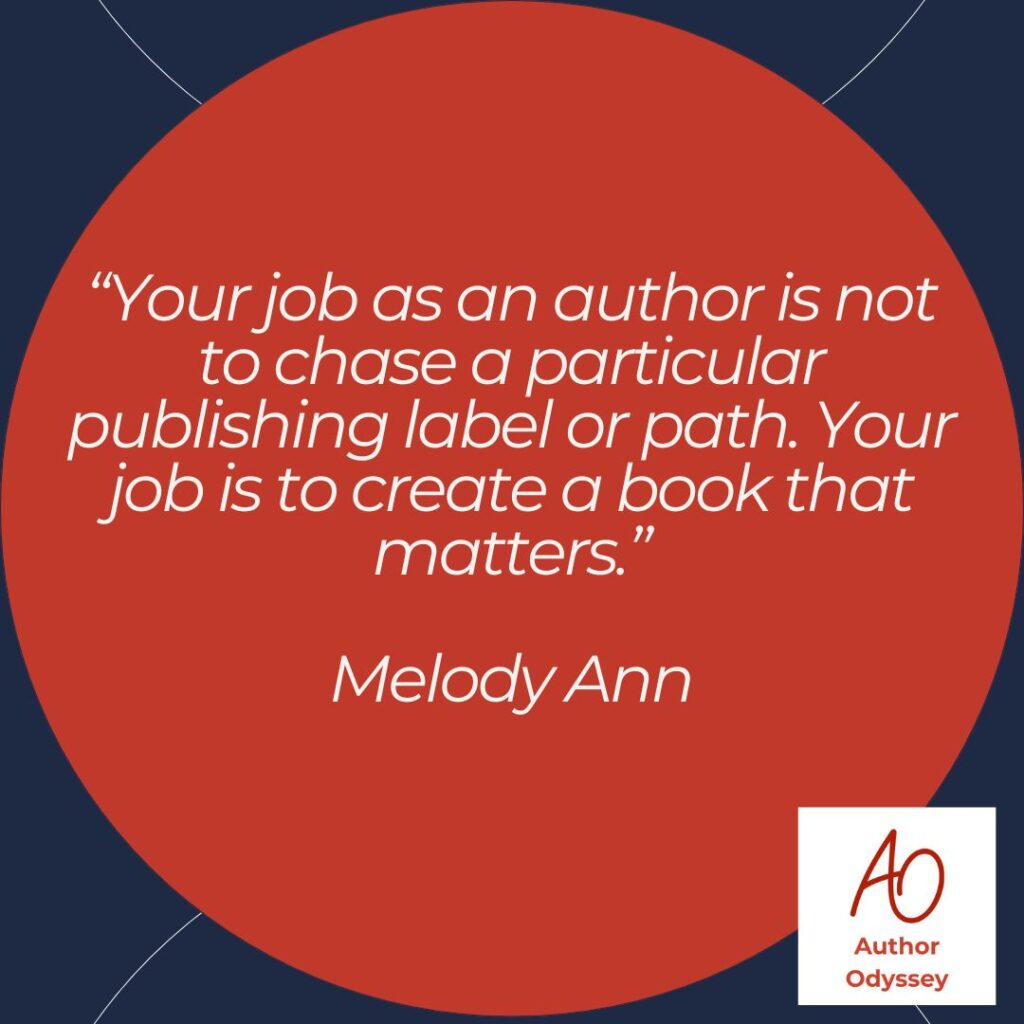
The right publishing path isn’t about trends, status, or what others are doing. It’s about alignment. When your publishing strategy matches your purpose, your audience, and your goals, everything becomes clearer.
You stop second-guessing. You start building. And your book moves forward with intention.
Now your turn:
Which publishing path are you leaning toward right now, traditional, self-publishing, or hybrid?
Share in the comments or drop us an email at info@authornationtube.com and while you do that, check out our podcast on Spotify.
Till next time!
Join Author Odyssey to Get Clarity On Your Publishing Path Today!
Recent Articles

Why Trying to Please Everyone Kills Your Message
May 7, 2026
No Comments
Trying to reach everyone waters down your message. Write for one person and you’ll finally be heard. Key Takeaways From Why Trying to Please

Why Amazon Isn’t Working for Your Book (And Why Publishing a Book Is Not Enough)
April 30, 2026
No Comments
Why Amazon Isn’t Working for Your Book. Discover the real reason your book isn’t getting interest, and what to do differently starting today. Key Takeaways From

What Happens After You Publish (And Why Books Don’t Sell)
April 23, 2026
No Comments
Discover what really happens after you publish and take control of your book’s next chapter. Key Takeaways From What Happens After You Publish Publishing your