
Every nonfiction author faces the question, “Who am I to write this?” Learn how to turn comparison into curiosity and write the book only you can write.
Key Takeaways From Who Am I to Write This?
- Comparing your manuscript to a published book is one of the fastest ways to lose momentum.
- The real problem isn't the comparison itself, it's the fear that’s triggered by that comparison.
- Every nonfiction book exists within a larger conversation, not in isolation.
- Readers don't want the same perspective repeated; they want fresh insights and unique experiences.
- Curiosity is the antidote when comparison makes you stop writing.
- Your voice, experience, and perspective are what make your book valuable.
Who Am I to Think I Can Write This?
If you’ve ever looked at a bestselling book in your niche and immediately thought, Who am I to write this? you’re not alone. It’s one of the most common mindset challenges nonfiction authors face.
You pick up a successful book and suddenly everything about it seems impressive. The structure is polished. The message is clear. The author sounds confident and experienced. Then something happens, instead of feeling inspired, you start questioning your own book.
“This has already been written.”
“What could I possibly add?”
“Why would anyone read my version?”
Before long, you’re no longer focused on writing. You’re focused on comparing, and that’s exactly where many authors get stuck.
Why Authors Lose Confidence While Writing
Most authors assume comparison is the problem, but it’s not.
The real problem is what comparison awakens in all of us, fear.
Fear that you’re not qualified enough, that someone else has more expertise, that there is nothing new left to say, and fear that readers will choose another author’s book instead of yours.
When these fears take over your focus moves from the book you’re creating to the person who already created theirs. You stop comparing books and you start comparing people. That comparison is impossible to win because you’re comparing your unfinished work to someone else’s finished product.
The Comparison Gremlin
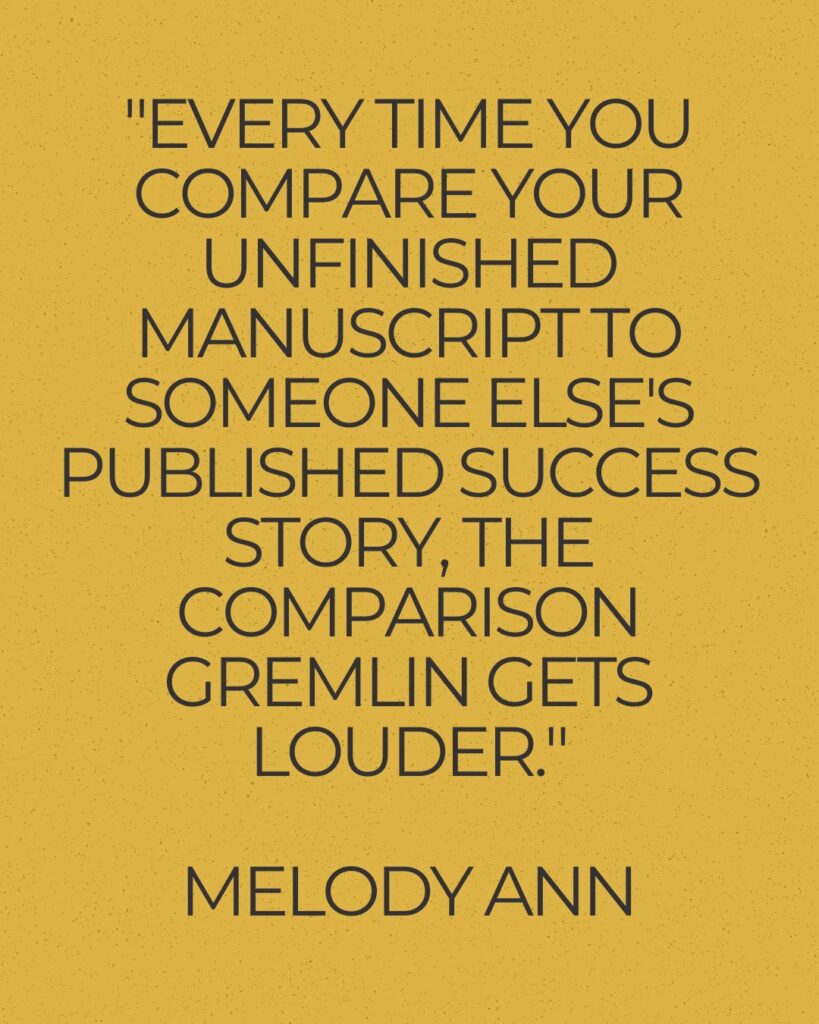
I like to think of this voice as the “comparison gremlin.”
The comparison gremlin shows up whenever you discover a book similar to yours, and it whispers things like:
They wrote a better book.
They’re more experienced.
Your ideas aren’t original.
You’ll never measure up.
There’s no room for another book on this topic.
The longer you listen to this gremlin, the louder those whispers become. Eventually, comparison makes you stop writing altogether, or worse, you keep writing while feeling discouraged, frustrated, and disconnected from your own message.
Why Studying Other Books Still Matters
Here’s the important distinction: Studying comparable books is smart, comparing yourself to the authors is not. Every successful nonfiction book exists within a larger conversation. Readers come to a topic expecting certain frameworks, structures, and ideas.
Understanding what’s already available helps you see:
What readers value.
How successful books guide readers.
What promises are being made.
Where gaps exist in the conversation.
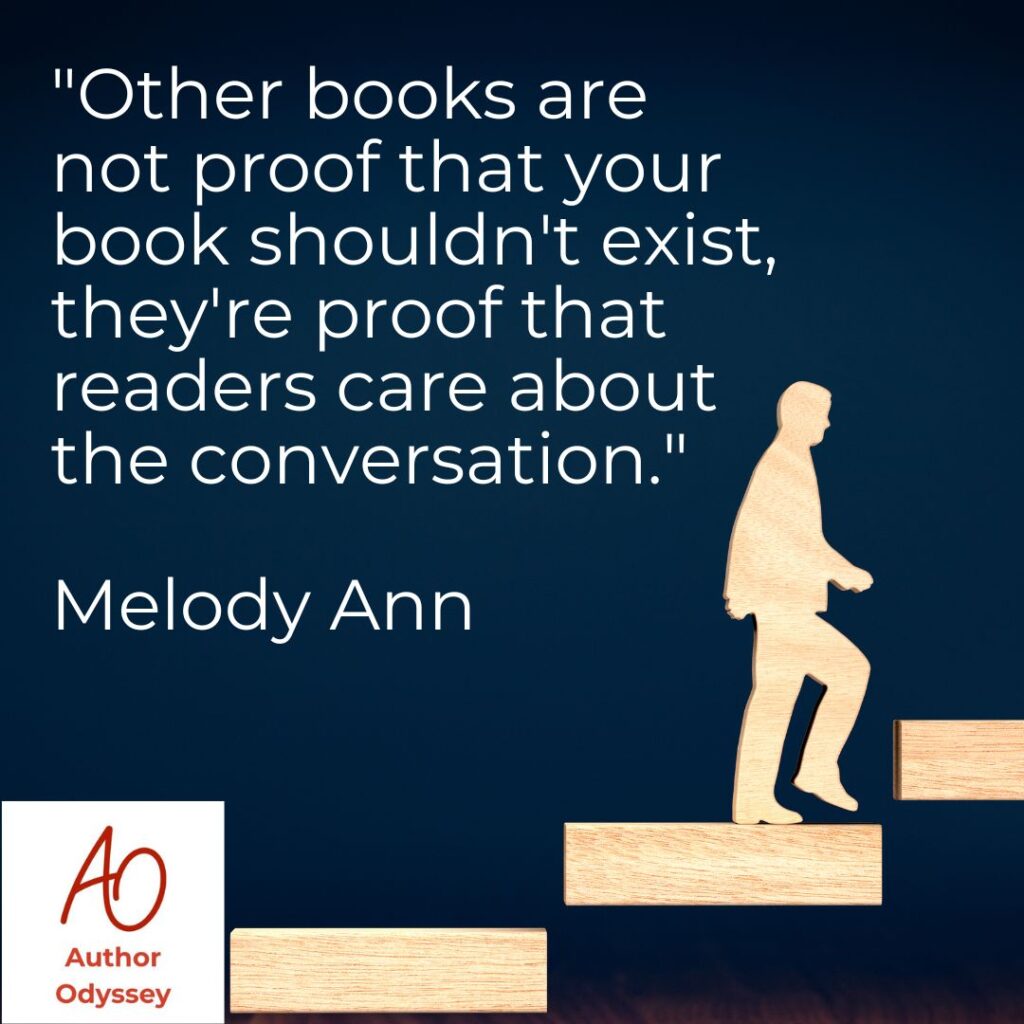
Researching your category is not about proving you don’t belong, it’s about discovering where you fit. Every successful book on your topic is evidence that readers care about that subject.
That’s good news.
When Comparison Makes You Stop Writing
The comparison gremlin has three favorite weapons.
The Intimidation Spiral
This is the belief that everyone else is farther ahead than you.
You look around and conclude that every author is more qualified, more successful, and more talented.
The Confidence Drain
This is when your confidence slowly disappears, you begin doubting decisions you were excited about only days before. And this makes you question your outline, your ideas, and your ability to finish.
Perspective Erasure
This is the most dangerous one.
You begin believing your perspective doesn’t matter and you convince yourself that someone else’s voice is more valuable than yours. As a result, you either stop writing or start imitating other authors instead of developing your own voice.
The Cure: Replace Fear with Curiosity
The greatest weakness of the comparison gremlin is curiosity.
Fear asks:
How can I measure up?
Am I good enough?
Why would anyone listen to me?
Curiosity asks:
What can I learn from this book?
How is this author creating clarity?
What promise are they making to readers?
What gaps can I fill?
How can I contribute something meaningful?
When you approach other books with curiosity instead of fear, comparison becomes research, and research is useful.
Your Book Doesn’t Need to Replace Anyone Else’s
One of the biggest misconceptions among nonfiction authors is the belief that their book must be better than every other book on the shelf. It doesn’t.
Readers routinely read multiple books on the same topic.
Someone interested in leadership may read ten leadership books, someone interested in productivity may read twenty productivity books, and someone interested in memoir writing may study dozens of memoirs.
Your job isn’t to eliminate every competing book, it’s to contribute something valuable through your:
Experience
Perspective
Insights
Stories
Voice
That’s what readers connect with.
Your Voice Is the Missing Piece
The next time you catch yourself asking, “Who am I to write this?” try asking a different question: “What can I contribute to this conversation?”
Because your book doesn’t need to be the only book, it doesn’t even need to be the best book.
It simply needs to be your book. The books already on the shelf are not your enemies, they’re your teachers and your neighbors. Most importantly, they’re proof that readers are actively searching for ideas like yours. So keep writing.
Your perspective may be exactly what someone needs to hear.
How does this knowledge affect your author journey?
Implementing the ideas from this post can dramatically improve an author’s ability to finish their book, maintain confidence, and develop a stronger, more distinctive message.
How These Ideas Help Authors on Their Journey
You stop seeing comparable books as competition and start seeing them as research.
Instead of feeling discouraged when you find successful books in your category, you’ll learn from them. This helps you understand reader expectations, identify gaps in the market, and strengthen your own book.
You overcome the “Who Am I to Write This?” mindset.
Many nonfiction authors struggle with imposter syndrome. The post reframes existing books as proof of demand, not proof that your book shouldn’t exist. Readers often seek multiple perspectives on the same topic.
You develop confidence in your unique perspective.
The most valuable thing you bring isn’t a completely original topic, it’s your unique combination of experiences, insights, stories, and voice. Recognizing this makes it easier to write authentically rather than trying to imitate other authors.
You replace fear with curiosity.
Fear shuts down creativity and momentum. Curiosity opens the door to learning, innovation, and better writing. When you ask “What can I learn?” instead of “How do I measure up?” you gain useful insights instead of losing confidence.
You stay focused on finishing your book.
Many authors abandon projects because comparison convinces them they aren’t qualified. Applying these ideas helps you keep moving forward and complete the manuscript readers are waiting for.
3 Quick Actions To Get You Back On Track
Create a “What I Bring” List
Take 10 minutes and write down:
Three experiences you’ve had that relate to your topic
Three lessons you’ve learned
Three insights you rarely hear others discuss
This immediately reminds you that your perspective is unique.
Turn Comparison into Research
Pick one successful book in your niche.
Instead of asking, “Why is this better than mine?” ask:
What’s the author’s main promise?
Who is this book helping?
What’s one thing they don’t cover deeply?
Write down your answers in 10 minutes.
Catch and Reframe One Gremlin Thought
The next time you think:
“Someone already wrote this.”
Replace it with:
“This proves readers care about this topic. What unique angle can I add?”
This simple mindset shift takes less than a minute but can stop a confidence spiral before it starts.
Every published book in your category is evidence that readers are looking for help. Your goal isn’t to be the only voice in the conversation, it’s to contribute a valuable perspective that only you can provide. The moment you shift from comparison to curiosity, you move from self-doubt back into authorship.
Recent Articles
Does Your Expertise Belong in a Book? The Best Format for Your Big Idea!
August 13, 2026
No Comments
You have valuable expertise to share, but before you start writing, discover whether your big idea truly belongs in a book—and whether now is the
Do People Keep Telling You to Write a Book?
August 7, 2026
No Comments
Do People Keep Telling You to Write a Book? Discover four practical signs that your expertise may be ready to become a focused nonfiction book

Forgot Why You Started Writing? Create a Personal Mission for Your Book
July 24, 2026
No Comments
Have you forgotten why you started writing your nonfiction book? Discover how reconnecting with your purpose can cut through the fog of confusion and help