
If you’re stuck between multiple versions of your nonfiction book, the problem probably isn’t your idea, it’s choosing one clear promise that gives every chapter a purpose.
Key Takeaways From Too Many Book Ideas?
- Having multiple strong book ideas isn't the problem, avoiding commitment is.
- Every successful nonfiction book is built around one clear central promise.
- Choosing one direction doesn't mean abandoning your other ideas.
- Ideas that don't fit this book can become future articles, talks, or even your next book.
- A simple "Later List" helps you stay focused while preserving your best ideas.
- Asking the right question can make every writing decision easier.
Too Many Book Ideas? Here's How to Choose One
If you’ve ever found yourself staring at several different versions of your nonfiction book, you’re not alone. Perhaps one version feels more personal, another seems more practical, and a third appears to have broader market appeal.
Then there’s the version that excites you the most, but you’re worried it may be too narrow or not reach enough readers. When every option seems viable, choosing one can feel almost impossible.
Many aspiring authors assume that if they’re struggling to move forward, they simply haven’t found the right version of their book yet. They tell themselves they need a little more research, more brainstorming, or more time to think. While those things can certainly be valuable, they often aren’t the real issue. More often than not, the obstacle is the act of making a commitment to ONE book.
Why Choosing a Book Direction Feels Hard
The hardest part about choosing a direction isn’t usually the writing itself, it’s what the decision represents. Choosing one path feels like closing the door on every other possibility. You worry that you’ll leave out an important story, disappoint potential readers, or discover later that you picked the wrong angle.
As a result many authors keep every option alive. They continue adding ideas, expanding their audience, and collecting examples because it feels safer than making a firm decision. Ironically, that strategy creates exactly the opposite effect. Instead of becoming clearer over time, the book becomes increasingly unfocused. More ideas compete for attention, the structure begins to weaken, and finishing the manuscript becomes harder with every passing week.
A strong nonfiction book isn’t created by keeping every possibility open. It’s created by making thoughtful choices about what belongs and what doesn’t.
The Commitment Chimera
Inside Author Odyssey we describe this pattern as the Commitment Chimera. It appears just as you’re beginning to recognize the true center of your book, whispering doubts that make committing feel risky.
It tells you that choosing the wrong direction will ruin the book and convinces you that every good idea deserves equal attention. It says, “Your book is too important to focus on one promise, and making your message more specific will exclude readers who could benefit from it.”
Sometimes it simply encourages you to wait a little longer until you’re completely certain.
While those thoughts may sound reasonable, they all lead to the same destination: indecision. When every possibility is treated as equally important, none of them are allowed to become the clear leader your book needs.
The Truth About Finding Your Focus
One of the biggest misconceptions authors have is that choosing one direction means throwing away all their other ideas. That’s simply not true.
Ideas don’t lose their value just because they aren’t the main focus of this particular book. Many become supporting stories that strengthen your message. Others become future blog posts, podcast episodes, keynote talks, workshops, or even entirely new books.
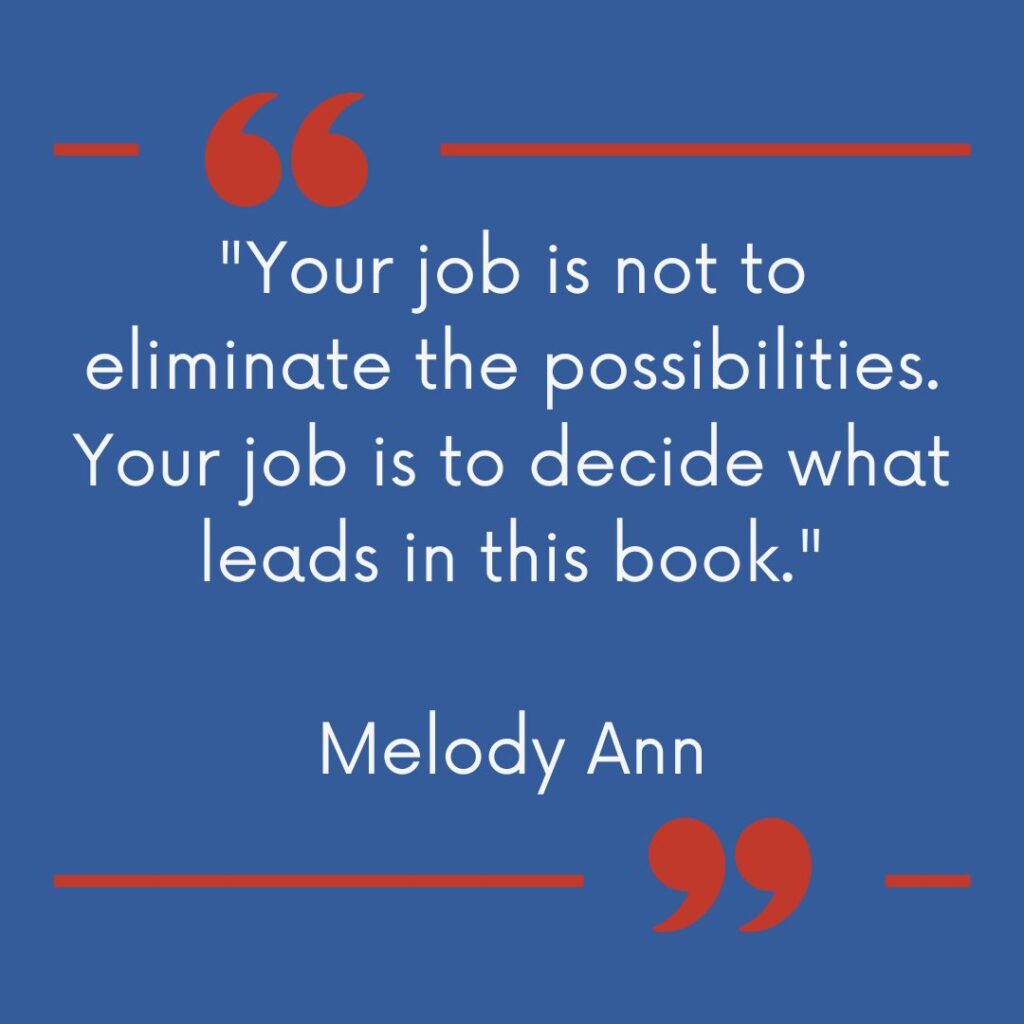
Choosing a central theme isn’t about eliminating possibilities; it’s about deciding which one deserves to lead this project.
The strongest nonfiction books are memorable because they make one clear promise to one specific reader. Every chapter, story, and example supports that promise. That focus creates clarity not only for your readers but also for you as the author. Once you know what your book is truly about, decisions about structure, examples, and even chapter order become much easier.
How to Know What Belongs in This Book
When you’re unsure whether an idea belongs in your manuscript, ask yourself one simple question:
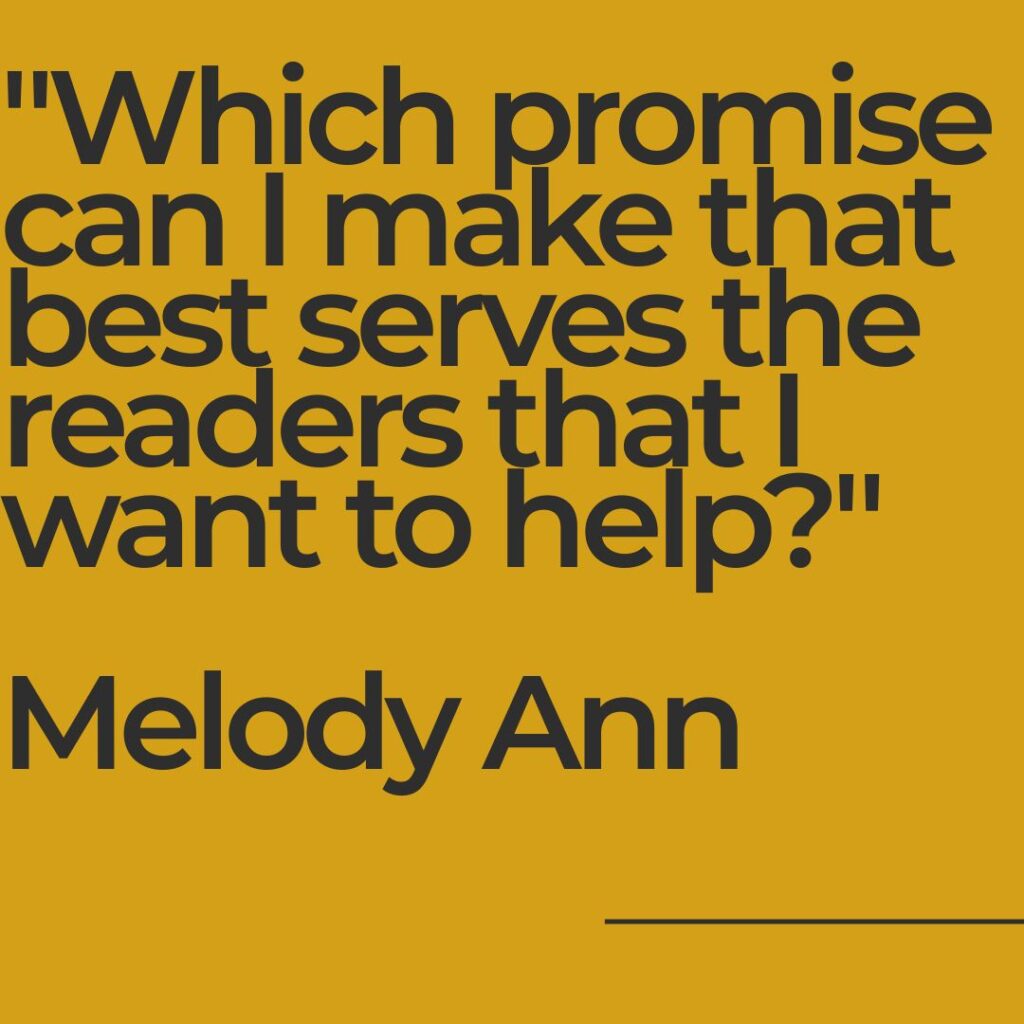
What promise can I make that best serves the readers I most want to help?
That question shifts your attention away from trying to include everything and toward serving your ideal reader exceptionally well. Every idea can then be evaluated against that central promise. If it strengthens the promise, it probably belongs. If it distracts from it, even if it’s a great idea, it may simply belong somewhere else.
One practical strategy that can make this process much easier is to create a document called your Later List. Every time a new idea pops into your mind that doesn’t quite fit your current manuscript, write it there instead of forcing it into the book. Knowing the idea has been safely captured makes it much easier to stay committed to your chosen direction without feeling like you’re losing valuable work.
Over time, you’ll likely discover that your Later List becomes a treasure chest of future content rather than a collection of missed opportunities.
Choosing Isn't Losing
The authors who finish their books aren’t necessarily the ones with the best ideas. They’re the ones who commit to one idea long enough to develop it fully.
Choosing a central promise doesn’t shrink your book, it strengthens it. It gives your manuscript direction, helps your readers understand exactly what they’ll gain, and makes every writing decision more straightforward. Rather than trying to create a book that serves everyone, you create a book that deeply serves the readers it was written for.
Ironically, that kind of focus often makes a book more appealing, not less.
How These Ideas Can Transform Your Author Journey
Implementing the principles discussed here can dramatically change your experience as a writer. Instead of constantly questioning your direction, you’ll develop greater confidence in your decisions and spend more time making meaningful progress. You’ll find it easier to organize your ideas, create a logical structure, and avoid the overwhelm that comes from trying to include everything you’ve ever learned.
Most importantly, committing to one clear promise gives you momentum. Momentum leads to consistency, consistency leads to completed chapters, and completed chapters eventually become a finished manuscript. Every successful nonfiction author reaches that point by making choices about what belongs in this book and trusting that there will always be opportunities to explore the rest of their ideas later.
Three Quick Actions To Help You Find Your Focus
1. Write your book’s core promise.
Spend five minutes finishing this sentence: “This book will help my readers…” Keep refining it until it describes one clear transformation.
2. Start a Later List.
Open a new document titled Later List and move three ideas from your manuscript that don’t directly support your main promise. They’ll be safe there for future projects.
3. Evaluate one chapter.
Choose a single chapter and ask, “Does every section support my central promise?” If something doesn’t, highlight it for revision or move it to your Later List.
Every time you make one small decision in favor of clarity, you strengthen your manuscript. Your goal isn’t to write the only book you’ll ever create, it’s to finish the book your readers need most right now.
Watch out for the next episode!
Recent Articles
Does My Manuscript Need More Revision? | When to Stop Editing Your Own! Book
October 15, 2026
No Comments
Wondering whether your nonfiction manuscript needs another round of revision? Learn how to recognise when more self-editing will genuinely strengthen your book—and when an outside
Choose the Right Editing Service | Which Level of Editing Does My Manuscript Need?
October 8, 2026
No Comments
Not sure what kind of editing your nonfiction book needs? Start with what feels off in your manuscript, and discover the right kind of editorial

Why Your Content Isn’t Working Together
October 1, 2026
No Comments
Learn how to build a Content Ecosystem From Your Expertise where your book, podcast, newsletter, workshops, and other content each have a clear purpose and