How To Finish Your First Draft Faster starts with a clear, flexible plan that keeps you focused, decisive, and moving forward.
Listen on Your Favorite Podcast Platform
Key Takeaways
- Planning does not kill creativity, it channels it.
- An outline is not a cage; it’s a container for flow.
- Strategic book planning for authors reduces decision fatigue.
- A flexible roadmap helps you avoid the messy middle.
- Using both divergent and convergent thinking speeds up drafting.
- If you want to plan your book like a boss, you must separate idea generation from structural decisions.
- Writers don’t need more pressure, they need a map.
How To Finish Your First Draft Faster (Without Killing Your Creativity)
You’re a nonfiction author, and you secretly believe that planning will box you in, slow you down, or drain the magic from your writing… This post is for you.
Because the truth is this:
Strategic book planning for authors isn’t creative suffocation, it’s creative liberation.
And if you want to know How To Finish Your First Draft Faster, the answer is not “write harder.”
It’s plan smarter.
The Myth That’s Slowing You Down
Many nonfiction authors believe:
“If I plan, I’ll lose the magic.”
“I’m a discovery writer. Outlines aren’t for me.”
“Structure makes books boring.”
“Planning will slow me down.”
But here’s the reality: Not planning is what slows you down and when you sit down to write without a roadmap, you are constantly asking:
What comes next?
Is this the right chapter?
Should this be earlier?
Am I repeating myself?
Where is this going?
That mental friction is exhausting and exhaustion is the enemy of finishing.
Why Planning Helps You Finish Your First Draft Faster
If you want to know How To Finish Your First Draft Faster, you need to eliminate unnecessary decisions.
Strategic book planning for authors works because it:
1. Reduces Decision Fatigue
When you’ve already mapped the journey, you’re not reinventing the structure every time you write.
You’ve made the big decisions upfront.
So when you sit down to draft, you can enter flow immediately instead of hesitating at the starting line.
2. Eliminates the Messy Middle
That mid-book identity crisis?
The “What am I even writing?” spiral?
A roadmap prevents it.
You don’t wander into the fog of confusion because you already know where you’re headed.
3. Prevents Massive Rewrites
Many writers who “pants” their first draft end up doing something painful:
They write the entire manuscript…
Then they go back and outline it.
Then they rewrite the whole thing.
That’s not freedom.
That’s double work.
When you plan your book like a boss, you make five-degree adjustments later — not 360-degree turnarounds.
Planning Is Not a Formula
Let’s be clear. Strategic book planning for authors does not mean:
Plugging your ideas into a rigid template.
Following a cookie-cutter chapter formula.
Stripping away your personality.
A good roadmap is flexible. Think of it as putting the bones in place: Your voice, your humor, your stories, and your insight. That’s the flesh, the life.
Structure doesn’t remove your personality. It gives it somewhere to stand.
The Two Thinking Modes Every Nonfiction Author Needs
If you want to finish your first draft faster, you must understand this, writing requires two types of thinking.
Divergent Thinking (Creative Mode)
This is:
Brainstorming
Free writing
Exploring ideas
Making connections
It’s expansive, playful, imaginative. Many nonfiction authors love living here. But if you stay here too long, your book stays chaotic.
Convergent Thinking (Structural Mode)
This is:
Organizing ideas
Categorizing content
Shaping the reader journey
Making strategic decisions
It’s focused and directional. Some authors feel safer here.
But if you never return to divergent thinking, your book feels dry and mechanical.
The Secret: Move Between Both
Planning is not about shutting down creativity.
It’s about knowing:
When to expand.
When to shape.
You brainstorm (divergent).
You organize (convergent).
You draft (divergent).
You refine (convergent).
When you do this intentionally, drafting becomes smoother and faster because the structural decisions are already made.
And that’s exactly How To Finish Your First Draft Faster, by writing inside a container instead of inside chaos.
A Quick Exercise for You
Ask yourself: What is one decision about your book you are currently avoiding?
Is it:
Your core thesis?
Your audience?
Your structure?
Your positioning?
The order of chapters?
Now ask: If you made that decision today, what would become possible? Often, the very thing you’re resisting is the key to momentum.
Why Nonfiction Authors Especially Need a Map
In nonfiction, clarity is everything.
You are guiding a reader from:
Problem → Understanding → Transformation.
Without structure, you risk:
Repetition
Rambling
Tangents
Reader confusion
Expensive developmental edits
Plan Your Book Like a Boss
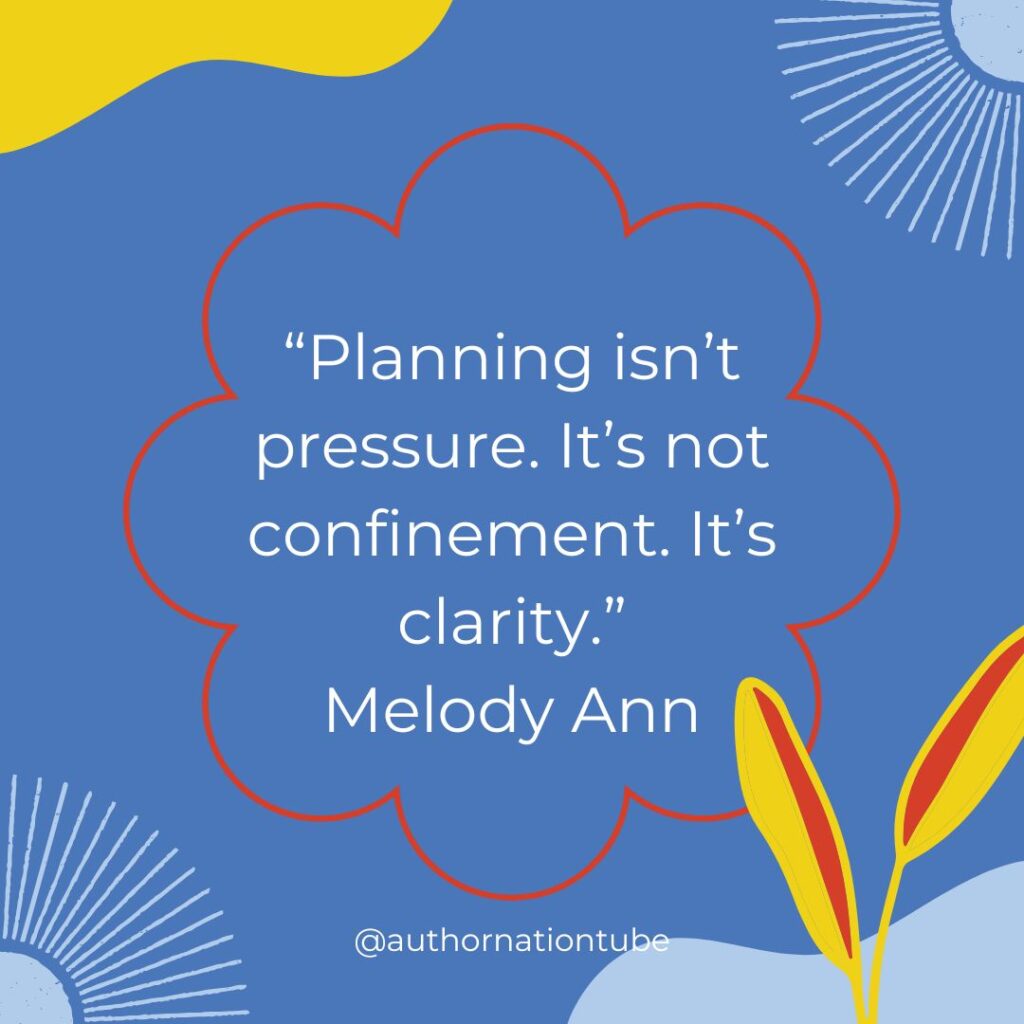
Planning isn’t pressure, it’s clarity. It’s not confinement, it’s creative protection.
When you plan your book like a boss:
You show up to write without panic.
You stay in flow longer.
You stop second-guessing.
You finish what you start.
Writers don’t need more hustle, they need direction.
They don’t need more pressure, they need a map.
And if you truly want to master How To Finish Your First Draft Faster, start by building a flexible roadmap that supports your creativity instead of fighting it.
Because planning isn’t the end of creativity, it’s where it finally gets to breathe.
How will the ideas from this episode help you?
Implementing the ideas from this episode doesn’t just help you write “better” it transforms your entire author journey, moving you from scattered and overwhelmed to clear, strategic, and in control. By creating a flexible roadmap, you eliminate the fog of confusion, know exactly where your book is going, and build the confidence needed to keep writing. Strategic planning reduces decision fatigue by handling structural choices upfront, allowing writing sessions to focus on creativity rather than evaluation. This preserves your energy, accelerates progress, and helps you sustain flow.
Planning first also protects you from the “massive rewrite” trap that many nonfiction authors face, drafting without structure only to redo large sections later. A pre-planned roadmap allows for smaller, manageable refinements, smoother editing, lower costs, and a stronger first draft. Additionally, understanding when to use divergent thinking (creative exploration) and convergent thinking (focused shaping) equips you to handle being stuck or scattered with ease. Ultimately, these strategies increase completion rates, helping you finish what you start by replacing chaos with clarity, structure, and momentum.
3 Quick Actions That Can Help You Finish Your First Draft Faster
1. Make One Avoided Decision
Ask yourself: “What is one decision about my book I’ve been avoiding?”
Examples:
Who is this really for?
What transformation am I promising?
What is the core thesis?
What comes before Chapter 3?
Now decide. Not perfectly, just decisively.
Momentum follows decisions.
2. Create a Rough 10-Point Skeleton
Set a timer for 5 minutes.
Without overthinking, jot down:
8–12 major sections or chapters in order.
Just titles or themes, nothing detailed.
You are not locking yourself in.
You are building bones.
This immediately reduces “what comes next?” paralysis.
3. Diagnose Your Current Mode
Right now, are you:
Stuck? (Nothing is flowing.)
Scattered? (Too many ideas everywhere.)
If you’re stuck → Spend 3 minutes freewriting wildly (divergent thinking).
If you’re scattered → Spend 3 minutes grouping and labeling ideas (convergent thinking).
Shift the mode. Change the momentum.
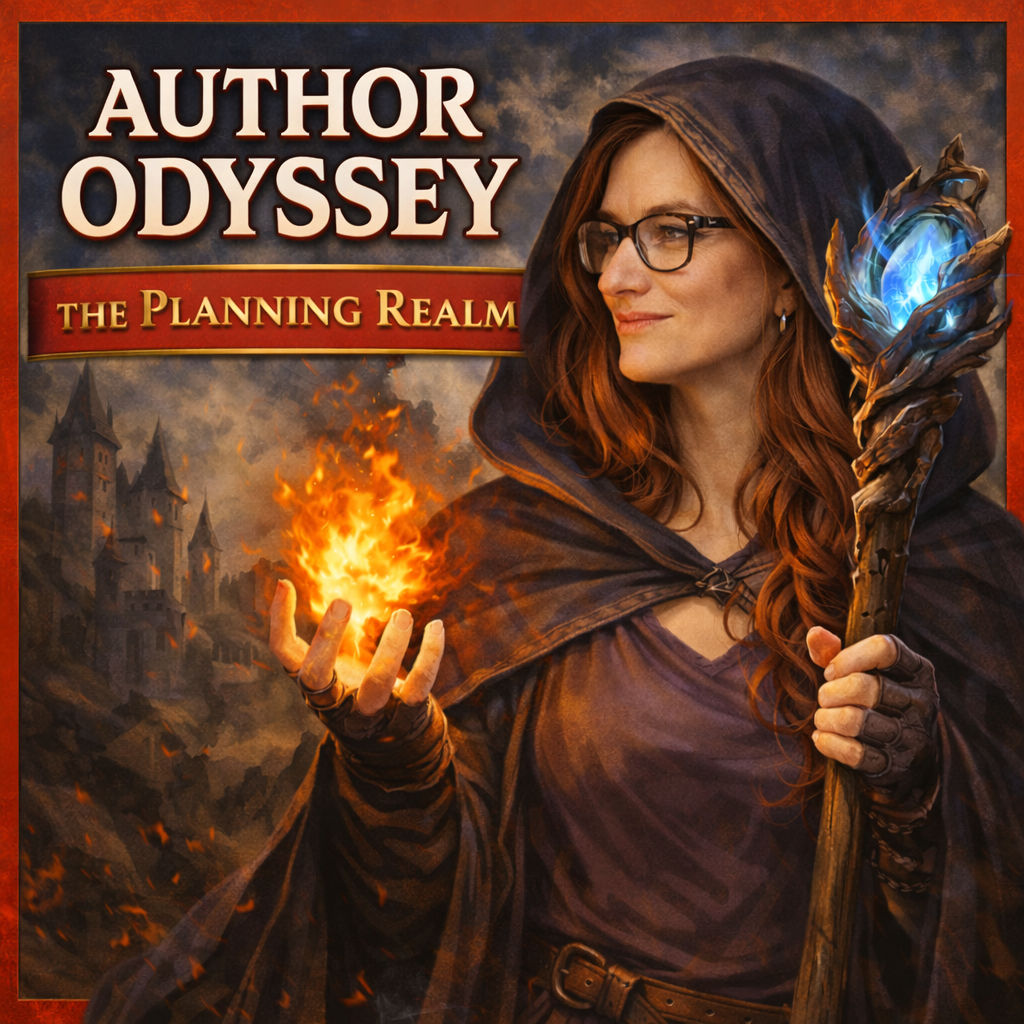
Join Author Odyssey to Finish the Project You're Stuck on
Recent Articles

Book Publishing Paths Explained
Book Publishing Paths Explained: Discover how to pick the right publishing path and determine the right book publishing strategy before you even start writing. Listen

How to Clarify Your Book Idea Before Writing
Discover how to clarify your book idea before writing by turning a broad topic into a crystal-clear concept that guides your entire nonfiction book. Listen

The Publishing Decision No One Explains
The Publishing Decision No One Explains (That Determines If Your Book Sells) Key Takeaways The question isn’t self-publishing vs traditional publishing, it’s who controls distribution