Title: Are you writing to the void? Author Odyssey Planning Realm

Are You Writing to the Void?

Title: Are you writing to the void? Author Odyssey Planning Realm

Are You Writing to the Void? Discover why your writing may not be connecting, and how to create deeper resonance with your readers. 

Key Takeaways From - Are You Writing to the Void?

A New Way to Think About Writing

You’re the type of author who works hard on your writing. You pour thought, care, and energy into every sentence. You revise and you refine, and you try to make your ideas meaningful and clear. Then you publish it, and hear absolutely nothing back.
There are no comments or emails, and no connection. Eventually the doubts start creeping in:
Maybe I’m not a good writer.
Maybe my ideas aren’t interesting enough.
Maybe nobody actually cares.
For many nonfiction authors this experience is painfully familiar, and if you’ve been wondering ‘Why do readers lose interest in my writing?’ You’re not alone.
Something is missing in your writing, and here’s what:
It’s not your skill or  your ideas. It may simply be that your writing has lost sight of your reader.
Title: Are you writing to the void? Author Odyssey Planning Realm

 The Problem Isn’t Always the Writing

Many authors assume weak engagement means weak writing. So they focus on:
  • Better sentence structure.
  • Stronger hooks.
  • More authority.
  • More polished prose.
  • More “perfect” ideas.
Often, that’s not the real issue, the real issue is that the writing has become disconnected from the person it’s meant to serve. Writing is not meant to exist in isolation, it’s meant to function as a conversation.
When authors write entirely inside their own heads, inside their own expertise, process, and perspective, the work can become generic, even when the ideas themselves are valuable.
Readers don’t connect because they don’t feel seen.

The Echo Void

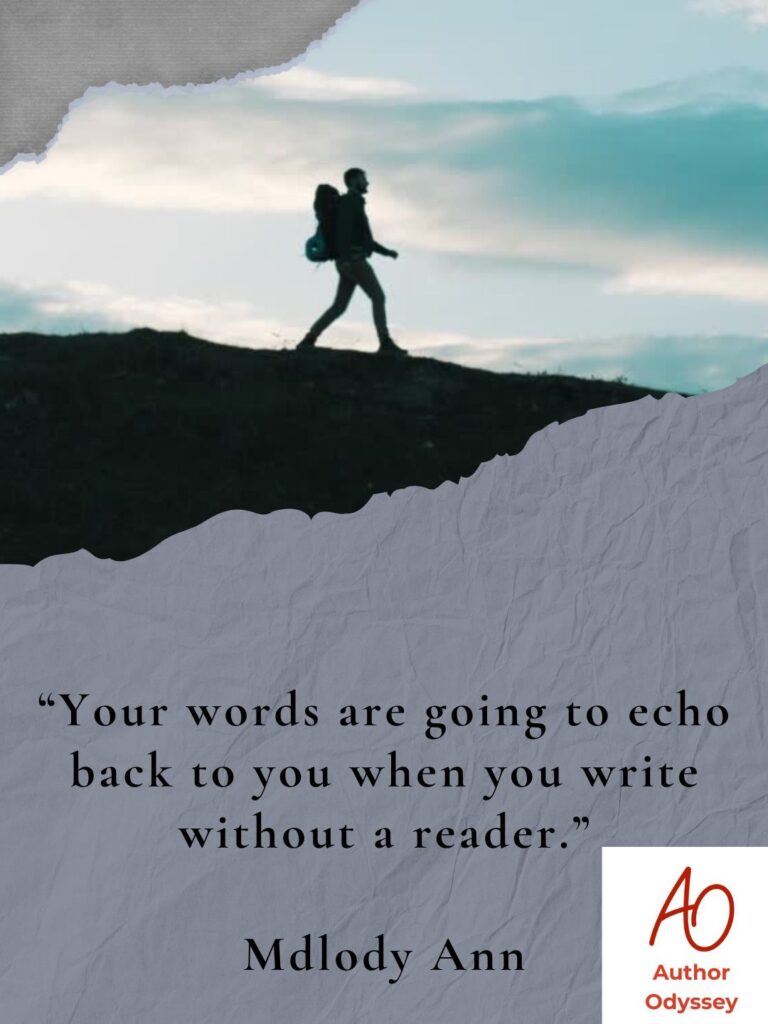
At Author Odyssey, we call this experience the echo void. Imagine standing on the edge of a canyon and shouting your words into empty space, only to hear them bounce back at you. That’s what writing without a clear reader feels like.
You publish something meaningful, but instead of connection, all you hear is silence. The problem is not necessarily the message, the problem is that the message was never directed toward someone specific enough to receive it.
Why Specificity Creates Connection
One of the biggest fears nonfiction authors have is being “too specific.”
They worry:
  • What if I alienate people?
  • What if my audience becomes too narrow?
  • What if not everyone relates?
Ironically, the opposite is usually true. When you write to everyone, nobody feels personally spoken to.
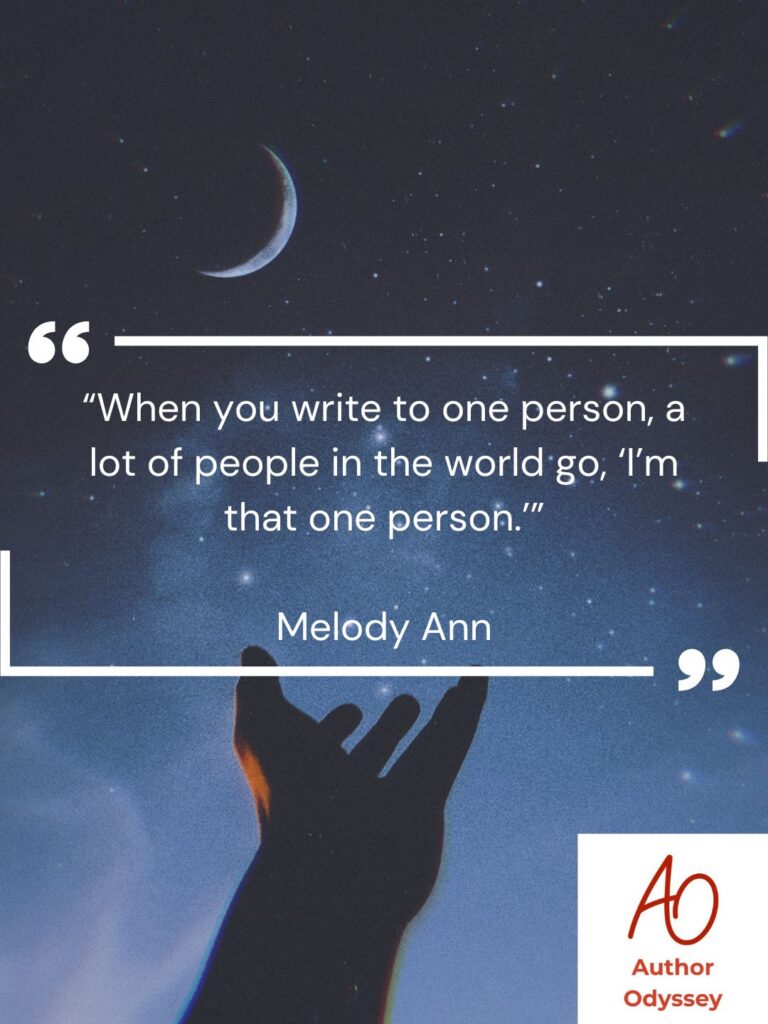
But when you write to one specific person, one reader with one struggle, one perspective, one emotional reality, many readers suddenly recognize themselves in your work.
They think: This author understands me, and that is what creates resonance.

A Better Way to Think About Writing

Imagine sitting across from someone in a coffee shop. They came to you because they’re struggling with something you understand deeply, and they trust your insight. This person genuinely wants your help.
Now imagine they can’t speak, they can only listen. How would you explain the idea to them?
You would naturally:
  • simplify your language.
  • choose clearer examples.
  • become warmer.
  • speak more honestly.
  • and focus entirely on what they need to hear.
That’s what strong nonfiction writing feels like. It’s not a polished performance, it’s a conversation.
Why Readers Lose Interest in Writing
Readers lose interest when writing feels emotionally distant and they disengage when the content feels too broad, the tone feels impersonal or the message lacks focus. Their interest wanders when the writer seems more concerned with sounding impressive than being understood.
Readers will stay engaged when they feel recognized, emotionally included and understood. They want to be guided by someone who truly sees their problem. Connection matters more than perfection.
The Power of Writing to One Reader
When you identify one ideal reader, everything changes.
Your tone becomes more natural, your word choices become easier, and examples become more relevant. Writing becomes more natural, warmer and more human. You stop trying to write perfectly and instead you start trying to communicate clearly to someone who matters. That shift transforms your work.

How The Echo Void Affects You

If your writing feels quiet and your ideas aren’t landing, or if you feel invisible after publishing, it does not automatically mean your writing is bad. More often it means your writing isn’t aimed clearly enough at the reader who needs it most. The best nonfiction books are not broadcasts, they are conversations.
The moment your reader feels like you’re speaking directly to them, your writing stops echoing into the void.
How These Ideas Will Help You To Avoid The Void
Implementing the ideas from this discussion can completely change how readers experience your writing. Instead of feeling like you’re publishing into silence, you begin creating genuine connection with your audience. Once you stop speaking to the masses and find your ‘one’ reader, your writing becomes clearer, warmer, and more emotionally engaging because you’re writing to someone.
For nonfiction authors, this shift helps you:
  • Build stronger reader trust.
  • Create content that feels more personal and memorable.
  • Develop a more natural writing voice.
  • Improve reader engagement and responses.
  • Stop overthinking every sentence.
  • Write with more confidence and direction.
Most importantly, it helps you move from simply sharing information to creating transformation for your readers.

3 Quick Actions To Stop Your Writing From Vanishing Into The Void

Define Your One Reader
Take 3 minutes to write down:
  • Who your ideal reader is
  • What they’re struggling with
  • What they desperately want help with
Be specific.
Rewrite One Paragraph
Choose one paragraph from your current project and rewrite it as if you were speaking directly to one real person sitting across the table from you at a coffee shop.
Focus on clarity and connection instead of trying to sound impressive.
Ask This Before Publishing
Before you publish anything, ask:
“Would my ideal reader feel personally seen by this?”
If the answer is no, adjust the tone, examples, or wording until it feels like a conversation rather than a lecture.

Recent Articles You Might Find Useful

Leave a Comment

Before you Go...