
Not sure what kind of editing your nonfiction book needs? Start with what feels off in your manuscript, and discover the right kind of editorial support to help you bring your book together.
Key Takeaways From How to Choose the Right Editing Service for Your Nonfiction Book
- Developmental editing addresses big-picture issues such as structure, scope, argument, pacing, and reader experience.
- Line editing improves how your writing works at the sentence and paragraph level, including clarity, flow, voice, and tone.
- Copy editing focuses on correctness and consistency, including grammar, spelling, punctuation, usage, and style.
- Proofreading is the final quality-control stage, particularly after formatting and typesetting.
- The best way to choose the right editing service is to identify the biggest problems your manuscript still needs to solve.
- When in doubt, solve the biggest problems first rather than starting with small errors.
How to Choose the Right Editing Service for Your Nonfiction Book
You’ve written the final word of your nonfiction book. Congratulations! But once the manuscript is finished, a new question often appears:
What happens next?
For many nonfiction authors, the answer is editing. But that raises another question: Which level of editing does your manuscript actually need?
Developmental editing, line editing, copy editing, and proofreading all serve different purposes. Choosing the wrong one, or doing them in the wrong order, can mean spending money on work that will simply need to be repeated later. The good news is that you don’t need to diagnose your manuscript perfectly. You simply need to identify what isn’t working yet.
Which Level of Editing Does My Manuscript Need?
One of the easiest ways to decide what your nonfiction book needs is to ask: What is still moving in the book?
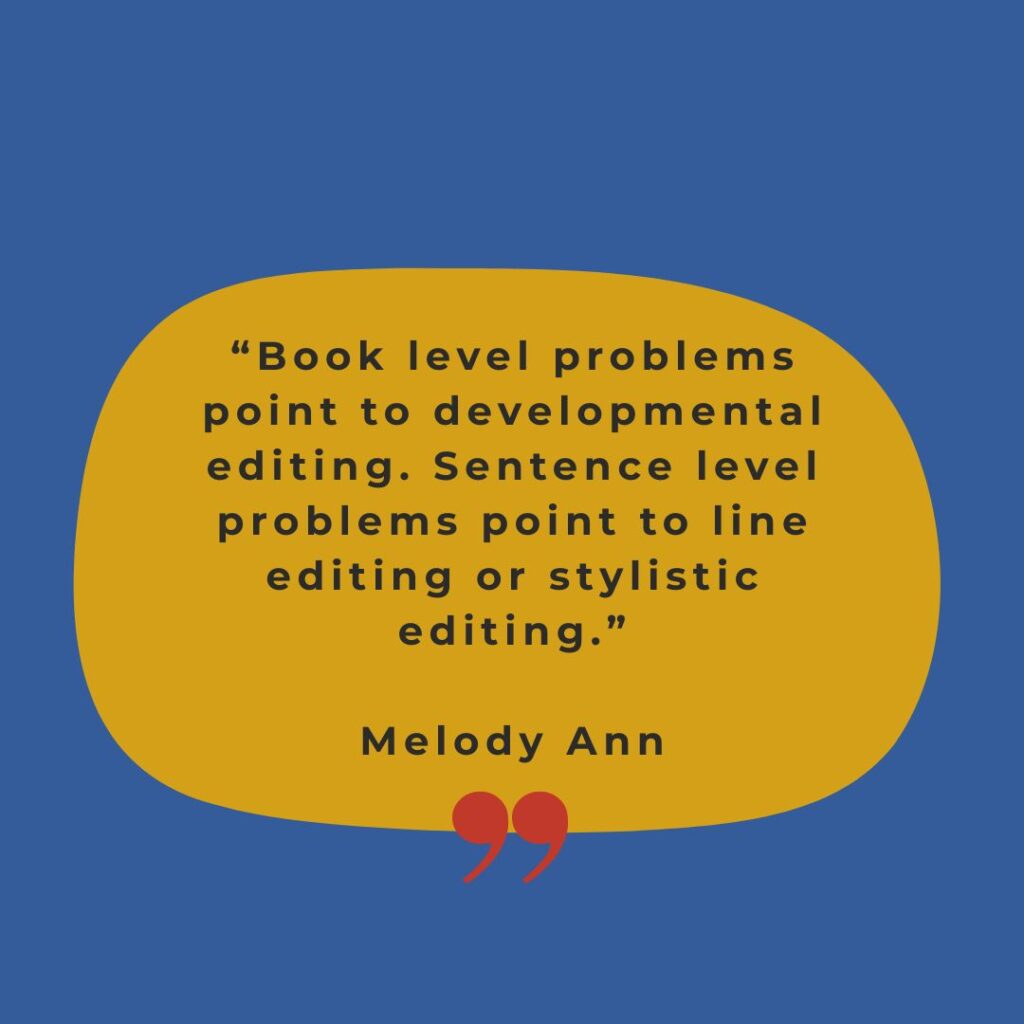
If the problems affect the book as a whole, you may need developmental editing, if problems are primarily at the sentence or paragraph level, line or stylistic editing may be appropriate, and if the manuscript is structurally and stylistically settled but needs attention to correctness and consistency, you’re looking at copy editing.
And once the book has been formatted and you need a final check for errors, that’s where proofreading comes in. Let’s look at each level in more detail.
Developmental Editing: The Big Picture
A nonfiction book may need developmental editing when the main problems aren’t individual sentences, they’re problems with the book as a whole.
For nonfiction authors, this might include:
Structure
Gaps in the argument
Repetition
Chapter order
Chapter structure
Scope
Pacing
Reader journey
Whether the book delivers on its central promise
For example, you might have excellent material but discover that Chapter 7 really needs to come before Chapter 3. Or perhaps your argument makes sense to you but isn’t yet easy for your reader to follow. These are book-level problems, and fixing individual sentences won’t solve them.
If you’re wondering: “Which level of editing does my manuscript need?” start by looking at the biggest questions surrounding the entire book.
Line Editing: Improving the Reading Experience
Once the overall structure is working, you can look more closely at how the writing itself works for the reader. That’s where line editing, or stylistic editing, comes in. Line editing focuses on paragraph- and sentence-level adjustments that help readers move smoothly through your nonfiction book.
This can include:
Clarity
Flow
Voice
Tone
Transitions
Sentence structure
Wordiness
For a nonfiction author, this matters because even a strong argument can become difficult to follow if the writing is unclear, repetitive, or overly wordy. Line editing isn’t primarily about finding every typo, it’s about making the writing communicate your ideas effectively and giving readers a smoother experience.
Copy Editing: Correctness and Consistency
Copy editing deals with correctness and consistency. It typically comes after your developmental and line or stylistic editing is complete. Why?
Because substantial changes may still happen during those earlier stages. If you copy edit too early, you may end up paying to have the same material edited again after you’ve made structural or stylistic changes.
A copy editor focuses on areas such as:
Grammar
Spelling
Punctuation
Usage
Syntax
Vocabulary
Consistency
Adherence to an appropriate style guide
Depending on the scope of the project, a copy editor may also flag writing that feels awkward or unnecessarily wordy. For a nonfiction book, consistency is particularly important. Your terminology, style, and presentation need to feel intentional throughout the manuscript.
Proofreading: The Final Quality Check
Proofreading is the final quality-control stage, it’s especially important after the book has been formatted because formatting and typesetting can introduce new errors.
A proofreader checks for things such as:
Typos
Lingering spelling or punctuation errors
Formatting-related errors
Layout issues
Other problems that may have appeared during production
Proofreading is about making sure the final version is clean and ready for the reader, it isn’t a substitute for developmental editing, line editing, or copy editing.
Developmental Editing vs. Copy Editing
One of the most common sources of confusion for authors is deciding between developmental editing and copy editing.
A simple way to think about the difference is this:
Developmental editing asks: Does the book work?
While copy editing asks: Is the writing correct and consistent?
If you’re still wrestling with structure, argument, scope, chapter organization, or the reader experience, those big-picture questions need to be addressed first. If those decisions have already been made and your manuscript is mostly ready, copy editing can focus on grammar, usage, vocabulary, punctuation, spelling, and consistency.
The same principle applies to line editing: if the ideas and structure are solid but the writing needs to become clearer, smoother, or more effective, line editing may be the next step.
How to Choose the Right Editing Service for Your Book
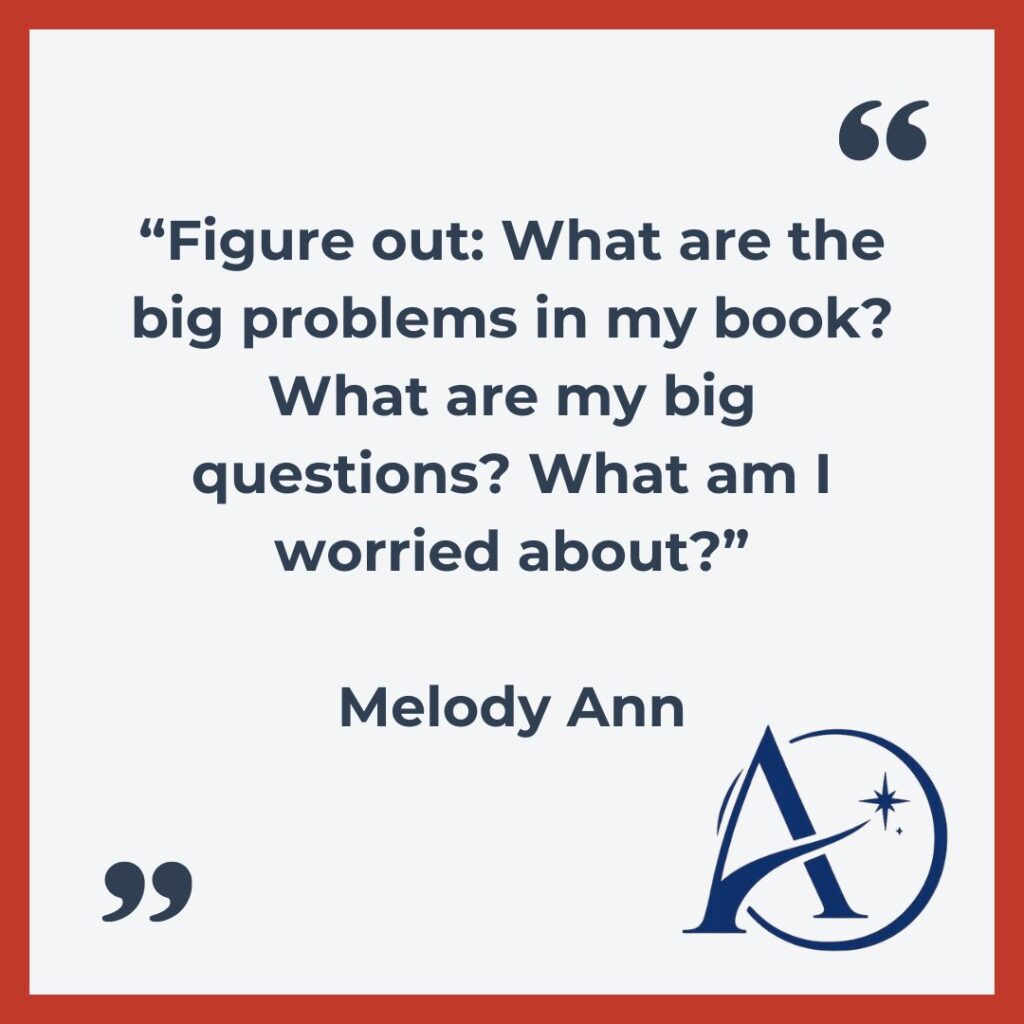
So, how do you choose the right editing service? Don’t start with the name of the service, start with the problems.
Ask yourself:
What are the biggest problems in my book right now?
What questions am I still worried about?
Where do I feel the manuscript isn’t working?
Your answers can tell you much more than simply saying, “I need an editor.”
For example:
“I’m not sure my chapters are in the right order.” → Developmental editing
“My argument feels repetitive.” → Developmental editing
“My ideas are solid, but the writing feels clunky.” → Line editing
“The manuscript is finished, but I want to make sure the grammar and punctuation are correct.” → Copy editing
“The book has been formatted and I want a final check for errors.” → Proofreading
The goal isn’t to select the editing service that sounds most appropriate, it’s to identify what needs solving right now.
Solve the Biggest Problems First
A useful rule for nonfiction authors is: Solve the biggest problems first.
If you’re unsure whether your structure works or whether readers will be able to follow your argument, start there. A typo matters, but a reader who can’t follow your argument has a much bigger problem.
That doesn’t mean typos don’t matter. They do. But there’s little value in perfecting punctuation in a chapter that may later be completely reorganized.
Think about editing as a sequence. First, solve the problems that affect the entire book, then improve how the writing works, then address correctness and consistency, and finally, check the formatted book for remaining errors.
This approach can help you avoid doing the same work twice.
You Don’t Need to Diagnose Your Book Perfectly
If you’re an author trying to figure out how to choose the right editing service for your book, you may feel like you need to know exactly what type of editing you need before contacting an editor.
You don’t, you need to be able to describe where you think the manuscript isn’t working.
Maybe you’re worried about the structure.
Maybe you’re unsure whether the argument is clear.
Maybe the chapters feel repetitive.
Maybe the writing doesn’t sound the way you want it to.
Maybe you’re simply not sure what needs attention.
Those observations are enough to begin a useful conversation with an editor, a professional can ask questions about your manuscript, where you are in the writing process, and what you’re trying to accomplish with the book. From there, you can determine what type of editing makes sense for the manuscript at that stage.
Final Thought
You don’t have to diagnose your manuscript perfectly, start by identifying the biggest questions and the biggest problems. Then solve those problems in order, from the big-picture issues down to the smallest details.
Your book doesn’t need perfect editing all at once, it needs the right editing at the right stage.
How Can This Information Help You on Your Author Journey?
Implementing the ideas discussed here can help nonfiction authors stop guessing about what their manuscript needs and focus their time and budget on the most important improvements first.
3 Quick Actions To Help You Identify The Type of Editing You Need
Identify your biggest manuscript problem — 3 minutes
Ask yourself: Is my biggest issue the overall structure and argument, the quality of the prose, correctness and consistency, or final errors? This gives you a starting point for choosing the right editing service.Do a “big-picture” manuscript check — 5 minutes
Pick one chapter and ask: Does this chapter have a clear purpose, flow logically, and deliver what the reader needs? If the answer is no, you may need to address developmental issues before polishing individual sentences.Create your next editing step — 2 minutes
Write down one sentence: “My next editing priority is ______ because ______.” You don’t need to diagnose your manuscript perfectly. The goal is simply to identify the biggest problem and tackle that before moving to smaller details.
Recent Articles
Choose the Right Editing Service | Which Level of Editing Does My Manuscript Need?
October 8, 2026
No Comments
Not sure what kind of editing your nonfiction book needs? Start with what feels off in your manuscript, and discover the right kind of editorial
Why Your Content Isn’t Working Together
October 1, 2026
No Comments
Learn how to build a Content Ecosystem From Your Expertise where your book, podcast, newsletter, workshops, and other content each have a clear purpose and

You Already Have the Material for Your Book
September 17, 2026
No Comments
Before you sit down to write thousands of new words, take a closer look at what you’ve already created, you may discover that you already