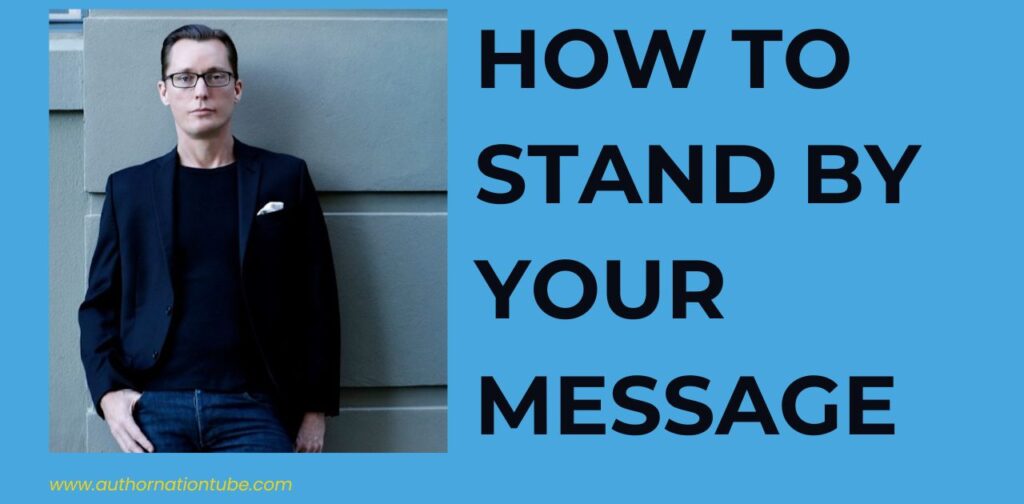
How To Stand By Your Message: Defend your voice, disarm critics, and bridge divides—even when writing about the world’s most divisive debates.
Listen on Your Favorite Podcast Platform
Join Melody Ann and Chris Rhyss—author of The Woke Paradox— as he shares actionable strategies for nonfiction authors. How to stand by your message while navigating divisive topics like politics, societal divides, and criticism. Learn how to write about charged issues without choosing sides, red-team your manuscript against backlash, and build resilience in the face of polarized feedback.
What You Will Learn About How to Stand by Your Message
-
Writing About Politics Without Choosing Sides
- How to present balanced arguments while avoiding partisan traps.
- Chris’s “common ground” framework for finding shared values (e.g., education, safety) across ideological divides.
- Why avoiding weaponized language builds trust with readers.
-
Red-Teaming Your Manuscript Against Criticism
- Stress-test your arguments by anticipating counterpoints from all sides.
- Practical steps to fact-check and refine your narrative without compromising integrity. -
How To Stand By Your Message
- Chris’s resilience strategies: separating feedback from personal attacks, staying calm under fire, and focusing on your “why.”
- Why legacy matters: A book outlives its author, so craft it with care. -
Bridging Divides in Nonfiction
- Case studies from Chris’s research on wokeism, including interviews with polarized voices.
- How to reframe debates to emphasize shared goals over partisan rhetoric.
About our guest: Chris Rhyss
Chris Rhyss is a former Army Combat Engineer, journalist, and award-winning entrepreneur. He has authored five books, including The Woke Paradox, which dissects the evolution of “woke” culture and offers frameworks for bridging societal divides.
Chris is a TEDx speaker, Global Innovation Award winner, and PhD candidate in human-computer interaction. He blends humor, curiosity, and rigorous research to make complex topics accessible.
Episode Highlights
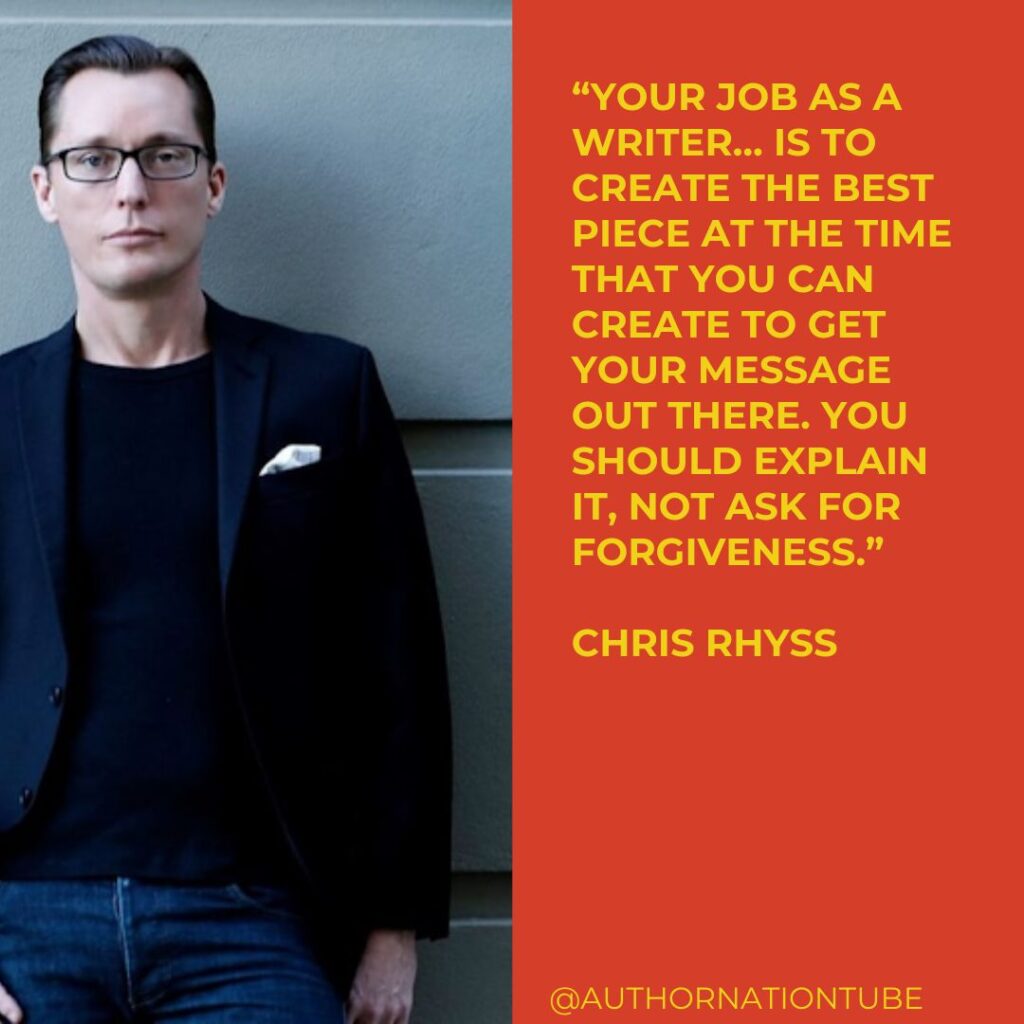
- On Neutrality: “Your job as a writer is to create the best piece at the time you can create. Explain your work—don’t defend it.”
- On Feedback: “Separate the message from the person. If someone corrects a factual error, change it. If it’s personal, thank them and move on.”
- How To Stand By Your Message: “Lock into your purpose. Unless new evidence emerges, hold true to your mission. A book is your legacy—write responsibly.”
- Red-Teaming Tip: “Find someone who hates your thesis. If their critique doesn’t shake your core argument, you’re on the right track.”
- Bridging Divides: “Start with common ground. Both sides want safe streets and good schools—use that to build dialogue, not walls.”
3 Actions That Will Help You Stand by Your Message
1. Define Your “Why” in One Sentence
Action: Write a mission statement for your book or project using Viktor Frankl’s framework:
“What is the reason this work exists? Who does it serve? What legacy do I want it to leave?”
2. Red-Team Your Manuscript in 30 Minutes
Action: Share your work with one person who disagrees with your thesis and ask:
“What’s the weakest point here? How would you attack this argument?”
3. Map Common Ground in Your Topic
Action: List 3–5 shared values (e.g., “safe communities,” “quality education”) that both sides of your debate care about.
Chris’s “bridging divides” strategy starts with identifying overlap to disarm polarization.
Want to finally publish your book and start making money from it? Download my FREE guide – The Publishing Decision: How to Choose the Best Path for Your Book! here.
Recent Articles

Forgot Why You Started Writing? Create a Personal Mission for Your Book
Have you forgotten why you started writing your nonfiction book? Discover how reconnecting with your purpose can cut through the fog of confusion and help

The Missing Step Between Finishing and Marketing Your Book
You’ve poured your heart into writing your nonfiction book. Now make sure it has the strongest possible chance of reaching the readers who need it

Too Many Book Ideas? Here’s How to Choose Your Book’s Focus.
If you’re stuck between multiple versions of your nonfiction book, the problem probably isn’t your idea, it’s choosing one clear promise that gives every chapter