
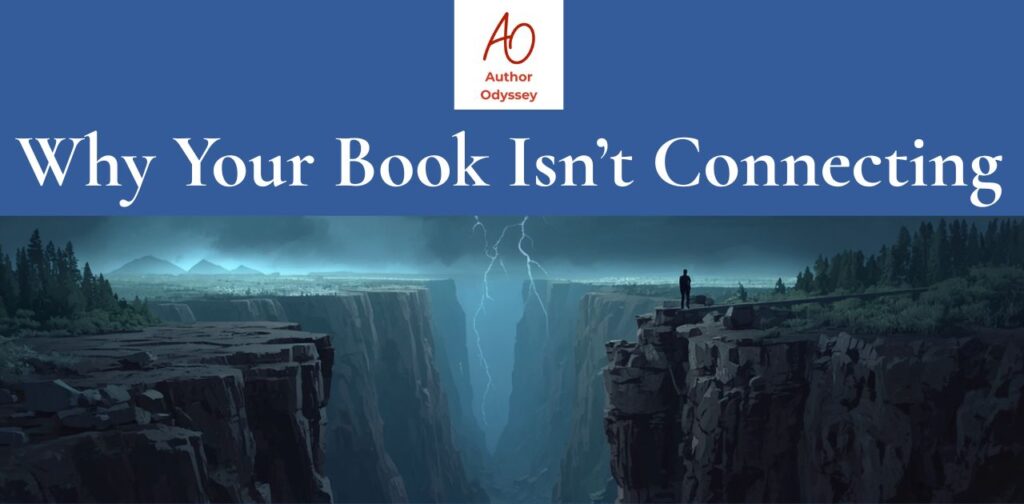
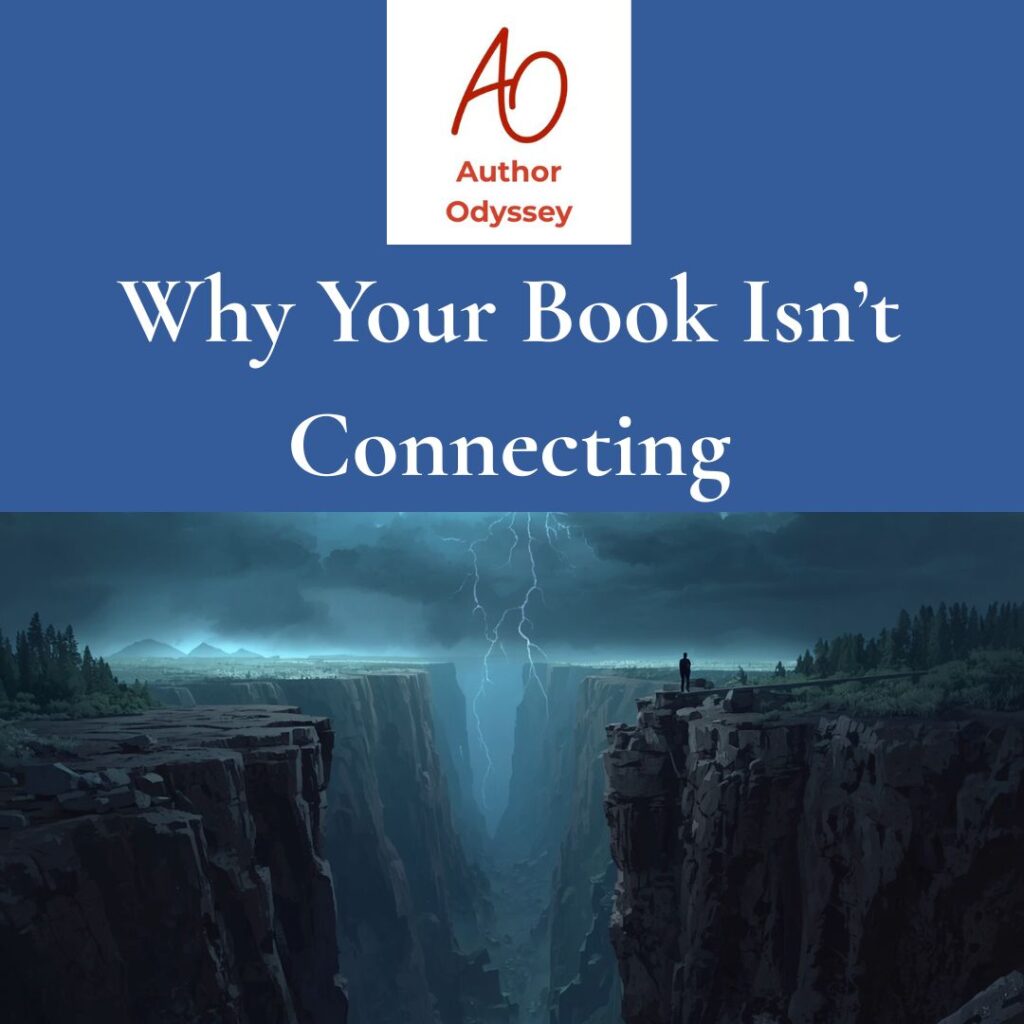
Why Your Book Isn’t Connecting has less to do with your writing skill — and far more to do with your reader connection.
Key Takeaways From Why Your Book Isn’t Connecting
- Great writing alone does not guarantee reader connection
- Nonfiction books work best when written for a clearly defined ideal reader
- Trying to write for “everyone” weakens your message
- Reader disconnection usually shows up in three common patterns
- Understanding your reader should happen before outlining or structuring your book
- Writing should feel like a conversation, not an information dump
Why Your Book Isn’t Connecting
If you’ve ever poured your heart into a nonfiction book, shared it with the world, and then heard nothing, you’re not alone.
No emails from readers, meaningful reviews, or even the sense that your message actually landed.
For many authors, this experience creates a painful internal story: “Maybe my ideas aren’t good enough, or I’m not a strong writer, do I need another course before I can publish?”
But here’s the truth, in many cases, the problem is not your writing ability. The real issue is often something much deeper: the connection between your book and your reader. This is exactly why your book isn’t connecting.
Why Your Writing Isn’t Connecting With Readers
Many nonfiction authors assume that stronger craft automatically creates stronger impact. But readers do not connect with books simply because the sentences are polished, they connect because they feel seen.
Your audience wants to feel like:
You understand their struggle
You know what matters to them
You’re speaking directly into their world
Your message was written specifically for them
When that relationship is missing, even excellent writing can feel emotionally flat. That’s why your writing feels disconnected from readers.
Writing Is a Conversation
One of the biggest mindset shifts for nonfiction authors is understanding that writing is not simply delivering information. It should be a conversation.
Too many authors approach their books like a giant knowledge dump: “Here’s everything I know, all my expertise, and all the information I have.”
But readers are not searching for information alone. They’re searching for resonance, and they want to feel understood, guided, and encouraged. A strong nonfiction book creates the feeling that the author truly “gets” the reader, and without that connection even valuable content can fail to land.
The Reader Connection Trap
At Author Nation, we call this problem the reader connection trap. This happens when your ideas are good and your writing is solid, but your work still doesn’t emotionally connect with readers. The good news? This problem is fixable.
In fact, most nonfiction authors fall into one of three specific patterns.
The Echo Void
The first trap is the echo void. This happens when you write entirely from your own perspective without anchoring your work in a real reader. You sit alone with your ideas:
your experiences,
your framework,
your insights,
your message.
And while the writing may feel meaningful to you, it was never shaped around someone else’s needs.
This often happens when authors write to process their own thinking, to share personal insights, or to “say what they want to say.”
That can work beautifully in a private journal, but when you publish a nonfiction book, the reader must become part of the conversation. Otherwise, your words simply echo back without response.
The Masked Crowd
The second trap is the masked crowd. This is when authors try to write for everyone.
You may think:
“Everyone struggles with burnout.”
“Everyone needs confidence.”
“Everyone wants productivity.”
But broad audiences contain wildly different needs. A message for overwhelmed parents, startup founders, college students, and retirees cannot all be solved with the exact same language, examples, and solutions.
When you try to speak to everyone, your message becomes too diluted to deeply impact anyone. This is one of the biggest reasons why your writing isn’t connecting with readers. Specificity creates connection, broadness weakens it.
The Scatterstorm Hydra
The third trap is the scatterstorm hydra.
This happens when authors narrow their audience slightly, but still try to serve too many different reader types at once.
For example:
entrepreneurs,
creatives,
executives,
and freelancers
may all struggle with productivity. But they experience different:
obstacles,
emotions,
pressures,
motivations,
and goals.
When a book tries to simultaneously solve all those different problems, the message becomes fragmented.
The reader starts asking:
“Is this really for me?”
“Does this author understand my situation?”
“Why does this advice feel generic?”
The more scattered the audience, the weaker the emotional connection becomes.
The Real Solution
The true solution is not more writing courses, more editing or endlessly polishing sentences. The solution is clarity around your ideal reader. Before you outline chapters, structure your framework or decide what content belongs in the book…
You need to deeply understand:
who you are writing for,
what they struggle with,
what they desire,
what keeps them stuck,
and what transformation they truly want.
When that relationship becomes clear, your writing changes dramatically. Your examples become sharper, your stories become more meaningful and your advice becomes more relevant. Your readers finally feel understood, and that is how connection happens.
Why Your Writing Feels Disconnected From Readers
If your nonfiction book has not been connecting the way you hoped, there’s a strong chance you’ve fallen into one of these reader connection traps. The encouraging part is this, you do not need to become a completely different writer, you may simply need a clearer relationship with your reader.
Because when nonfiction authors truly understand who they are speaking to, everything changes:
the clarity,
the confidence,
the message,
and the emotional impact of the book itself.
The goal is not just to publish a book. The goal is to create a book that readers feel was written for them.
How these ideas can affect your author journey
Implementing these ideas can completely change the trajectory of your author journey because it shifts the focus from “writing better” to “connecting better.”
Many nonfiction authors stay stuck for years believing they need more credentials, more writing courses, or more polished prose.
But the answer reveals something powerful: most authors already have valuable ideas and decent writing skills. The real missing piece is reader connection.
When authors begin writing with a clearly defined ideal reader in mind, several things improve immediately:
Their message becomes clearer
Their examples become more relevant
Their chapters feel more focused
Readers feel understood
Marketing becomes easier because the audience is defined
The author gains confidence because the writing finally gets responses
This approach also reduces overwhelm. Instead of trying to say everything to everyone, the author learns to create a meaningful conversation with one specific reader. That creates momentum, and momentum matters enormously in the author journey because connection fuels:
engagement,
feedback,
word-of-mouth,
reviews,
and long-term audience growth.
3 Quick Actions to help you connect with your reader
Define One Exact Reader
Take 5 minutes and write down:
Who is your ideal reader?
What are they struggling with today?
What transformation do they want most?
Be as specific as possible. One real person is better than a vague audience.
Rewrite One Paragraph
Pick a section from your manuscript and rewrite it as if speaking directly to one reader sitting across from you at a coffee shop.
Use:
“you”
specific struggles
conversational language
This instantly improves reader connection.
Identify Your Trap
Ask yourself which reader connection trap you are currently facing, go and check out the linked posts if you are unsure:
Echo Void → writing mostly for yourself
Masked Crowd → trying to help everyone
Scatter Storm Hydra → trying to serve multiple unrelated audiences
Simply identifying the trap can help you make clearer writing decisions immediately.
Join The Author Odyssey today, come and finish your book with us. Join HERE.
Recent Articles
What Is a Fair Price for Book Editing?
October 22, 2026
No Comments
What is a fair price for book editing? Discover what influences editing costs, how to compare quotes, and how to choose an editor whose expertise
Does My Manuscript Need More Revision? | When to Stop Editing Your Own! Book
October 15, 2026
No Comments
Wondering whether your nonfiction manuscript needs another round of revision? Learn how to recognise when more self-editing will genuinely strengthen your book—and when an outside
Choose the Right Editing Service | Which Level of Editing Does My Manuscript Need?
October 8, 2026
No Comments
Not sure what kind of editing your nonfiction book needs? Start with what feels off in your manuscript, and discover the right kind of editorial