

Thinking about paying someone to write your book? Discover what happens behind the scenes, from uncovering your expertise and shaping your ideas to capturing your voice and turning your knowledge into a manuscript that feels authentically yours.
Key Takeaways From Paying Someone to Write My Book
- Preparation comes first: Contracts, deliverables, timelines, costs, and expectations should all be agreed upon before writing begins.
- You probably have more material than you think: Your articles, presentations, case studies, professional experience, and personal stories can all contribute to your book.
- Ghostwriting is a collaborative process: Your ghostwriter needs your input, feedback, expertise, and availability throughout the project.
- Your voice matters: Regular reviews help ensure the manuscript accurately reflects your knowledge, ideas, and personality.
- Communication keeps projects moving: Delayed feedback and significant changes to the original book concept can affect both deadlines and costs.
Paying Someone to Write My Book: What Happens Before the First Words Are Written?
Hiring a ghostwriter is a significant investment, particularly when you’re writing a nonfiction book built around your professional expertise, experience, or business knowledge. But what does the process actually look like once you’ve decided to work with someone?
If you’ve been considering paying someone to write your book, understanding the process can help you know what to expect, what you’ll need to contribute, and how to get the most out of your investment.
Let’s walk through the ghostwriting process, from the initial conversations and interviews to drafting, feedback, revisions, and the responsibilities you’ll still have as the author.
What Happens Before Any Words Are Written?
Before a ghostwriter starts writing your book, there are several important details to establish. This is where the professional relationship begins, and it’s worth taking the time to get everything right.
Your contract should clearly outline what you’re paying for, what you’ll receive, the expected timelines, payment arrangements, and the specific deliverables included in the project.
For example, there’s an important difference between receiving a completed manuscript that still needs editing and receiving a manuscript that has already been edited and proofread and is ready for publication. These are two very different levels of service, and the costs will reflect that.
You should also discuss your expectations and long-term goals. Are you writing a book to establish yourself as an authority in your industry? Do you want to share your professional expertise, explain a particular approach, or tell the story of how you built a successful business? Your answers will influence how the book is approached and what your ghostwriter needs to deliver.
It’s also important to establish whether you’re a good fit for one another. A ghostwriter should be confident that they have the interest, knowledge, and experience to work with your subject matter. A good professional will be honest if your project would be better suited to another writer.
A book can take many months to develop, so finding the right working relationship matters.
You Probably Have More Book Material Than You Realize
One of the most interesting parts of working with a nonfiction ghostwriter is discovering just how much material you already have.
You might arrive with nothing more than a book idea and a general understanding of what you want to communicate, or you might have years of research, presentations, articles, training materials, and carefully prepared notes.
Neither starting point is necessarily better than the other. What matters is understanding your goals and identifying the material that will help you achieve them.
If you’re a business owner, for example, you might have case studies, internal training documents, presentations, and years of experience solving problems for clients. If you’re a medical professional, you might have research, articles, courses, and practical experience that could form the foundation of a valuable nonfiction book.
The challenge isn’t always finding the information. It’s identifying the most important ideas and communicating them in a way that makes sense to someone who doesn’t already know what you know.
This is where the ghostwriter’s questions become particularly important.
How Do You Turn Your Client’s Expertise Into a Book?
A good ghostwriter doesn’t simply ask you to explain your subject and then write down everything you say. Their job is to understand your knowledge, experience, and perspective, then help shape that material into something meaningful for your intended reader, and conversation is often the best place to start.
Your ghostwriter will want to understand who you are, what you know, what you’ve experienced, and, perhaps most importantly, why you want to write this particular book. Your motivation matters because it helps establish the direction of the project.
Through interviews and questions, your ghostwriter can begin uncovering ideas that you might not have considered particularly important. Sometimes the most interesting material emerges from an unexpected question or a seemingly insignificant anecdote.
For example, you might have developed a particular approach to running your business. Explaining the approach is useful, but understanding how you developed it, what challenges you faced, and what you learned along the way can make the book far more engaging. Your expertise gives the book its substance but your experiences and stories help bring that expertise to life.
This is particularly important for nonfiction authors who want to share professional knowledge without producing a manuscript that reads like a textbook.
Turning Interviews Into a Book, Not Just a Transcript
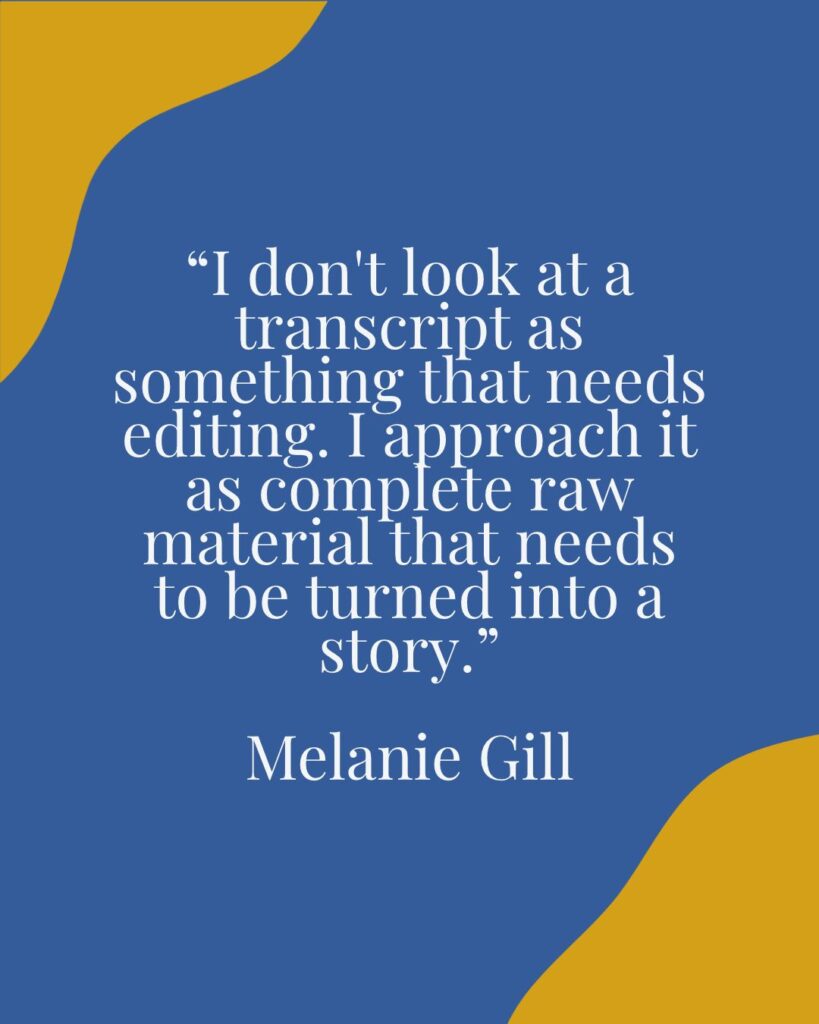
Interviews are an important part of many ghostwriting projects, but a transcript isn’t a manuscript. When people speak, they don’t necessarily organise their thoughts in a logical sequence. They repeat themselves, use filler words, jump between subjects, and occasionally wander off into completely unrelated territory.
That’s perfectly natural in conversation, but it doesn’t always translate well onto the page. A ghostwriter takes that raw material and turns it into a structured narrative that communicates your ideas clearly and effectively.
This might mean moving information around, developing certain stories, removing repetition, and finding the best way to connect one idea to another.
For memoirs and books about professional journeys, business development, or personal experiences, interviews can provide an excellent foundation. However, more technical nonfiction requires additional work. A technical manual, for example, cannot necessarily be created from conversations alone. It may require substantial research, supporting information, and technical accuracy checks.
Understanding the type of book you’re creating helps determine what material and research will be needed.
Finding the Right Ghostwriter for Your Book
Choosing a ghostwriter isn’t just about finding someone who can write well. You need someone who understands YOUR subject, is genuinely interested in the project, and can communicate your ideas convincingly.
Before accepting a project, a ghostwriter should look at the available material and consider whether they are the right person to write it.
If they don’t have the relevant experience or knowledge to understand your subject, they may struggle to produce a manuscript that accurately represents your expertise.
A good ghostwriter will also consider whether your working styles and expectations are compatible. If they aren’t the right fit, referring you to someone better suited to your subject is often the more professional decision. Remember, you could be working together for up to a year and you want someone who is invested in helping you create the best possible book.
When Does the Actual Writing Begin?
Once the contract is signed, the expectations are established, and the deposit has been paid, the project can officially begin.
A professional ghostwriting project should have clear timelines and milestones. These help both parties understand what needs to happen, when it needs to happen, and what each person is responsible for along the way.
Interestingly, writing a book doesn’t necessarily mean starting with the introduction and working through every chapter in order. Your ghostwriter might begin with particular chapters or sections that are easier to develop using the material already gathered. This can also be an excellent way to establish your voice.
And that’s an important distinction. You’re not paying someone to write a book in their own voice, you’re hiring someone to communicate your ideas in yours.
Working on selected sections first gives you an opportunity to see how your ghostwriter interprets your thoughts and experiences before the entire manuscript takes shape.
Why You Need to Review Your Manuscript Regularly
Once an outline has been agreed upon, reviewing the manuscript chapter by chapter is often a practical way to manage the project. Rather than waiting until the entire book has been written, you and your ghostwriter can review completed chapters as you go.
But what should you actually be looking for when you receive a chapter? Your primary responsibility is to check that the ghostwriter has captured your knowledge, ideas, and experiences accurately.
Ask yourself:
Have they understood what I’m trying to communicate?
Does the writing sound like me?
Are my ideas and experiences represented accurately?
Is there anything important missing?
You’re not expected to copy edit the manuscript or worry about every sentence. Those are separate stages of the publishing process. Instead, focus on whether the content reflects what you want your readers to understand.
One particularly useful question to ask yourself is: If someone who doesn’t know me reads this paragraph, will they understand my message, or will it sound as though someone else is speaking?
Catching problems early makes the entire process easier. You don’t want to reach the end of six chapters only to discover that your ghostwriter has misunderstood something important in chapter two.
Honest Feedback Makes a Better Book
Your relationship with your ghostwriter should allow for honest communication in both directions. If a paragraph doesn’t sound like you, say so. If something has been misunderstood, explain what needs to change. If an important detail has been left out, bring it to your ghostwriter’s attention.
A professional ghostwriter won’t take this personally, their responsibility is to help you create the book you want to write. Equally, you should be prepared to receive feedback from them.
Sometimes a ghostwriter might suggest removing a section, changing the direction of an argument, or reconsidering whether a particular story belongs in the book. The thing to remember is, you don’t have to agree with every suggestion, but you should be willing to consider the reasoning behind it.
Remember, the goal isn’t to produce a manuscript that makes everyone happy with every sentence. It’s to create a book that communicates your message effectively and gives your readers something valuable.
How Are Revisions and Changes Managed?
Once you’ve reviewed a chapter and provided feedback, your ghostwriter will work through your comments and implement the agreed changes. The revised chapter then comes back to you for another review before you move on to the next stage.
This step-by-step approach is generally much more practical than waiting until the entire manuscript is complete and attempting to rewrite large sections all at once. It also helps maintain consistency and ensures that both parties agree on the direction of the book as it develops.
It’s worth remembering that ghostwriting, copy editing, line editing, and proofreading are different stages of the process. Having someone write your book doesn’t automatically mean the manuscript is ready for publication.
Make sure you understand exactly which services are included in your agreement and which you’ll need to arrange separately.
What Slows Down a Ghostwriting Project?
If there’s one thing that can make or break a ghostwriting timeline, it’s communication. Your ghostwriter will likely be balancing several projects, and each one will have its own schedule and milestones. When one project gets delayed, it can affect the rest of their workload.
One of the most common problems is delayed feedback. If your ghostwriter sends you a chapter for review and you take several weeks to respond, the rest of the project may have to wait. This can push back your completion date and affect the overall schedule. Your availability and willingness to participate are very important parts of the process.
Another challenge is changing your book idea halfway through the project.
It’s perfectly normal for authors to discover new ideas as they work through their material, and sometimes a conversation reveals an interesting direction that wasn’t initially considered. However, there’s a difference between refining your original idea and deciding to write an entirely different book.
If you’ve agreed on one project and halfway through decide to discard the original concept, your ghostwriter may need to reassess the scope, fees, and timelines.
Essentially, you’re asking them to begin a new project rather than continue the existing one. This is why having a clear vision and agreed outline at the beginning is so valuable.
Paying Someone to Write My Book: What Is My Responsibility as the Author?
Hiring a ghostwriter doesn’t mean handing over all responsibility for your book. You are still the person bringing the expertise, experience, ideas, and perspective that make the book worth writing.
Your ghostwriter helps you communicate those things effectively, but they need your involvement to do that successfully.
You should be prepared to:
Share your knowledge, experiences, research, and existing material.
Make yourself available for interviews and conversations.
Review chapters and provide timely, honest feedback.
Communicate changes or concerns as they arise.
Respect the agreed scope, timelines, and project milestones.
The more engaged you are throughout the process, the smoother the collaboration is likely to be. A ghostwritten book is a professional investment, and getting the best possible result requires both parties to take that investment seriously.
The best results happen when both parties understand their responsibilities, communicate openly, and work towards the same goal. After all, your book should sound like you, reflect what you know, and give your readers a reason to keep turning the pages.
How This Knowledge Will Help You on Your Author Journey
Understanding the ghostwriting process helps you approach your book with greater confidence and realistic expectations. You’ll know what to prepare before hiring a ghostwriter, how to communicate your expertise, and why your involvement remains important throughout the project.
By applying these ideas, you can make better decisions about the support you need, avoid unnecessary delays, and build a productive working relationship with your ghostwriter. Most importantly, you’ll be better equipped to turn your knowledge and experience into a book that reflects your voice and delivers value to your readers.
Keep an eye out for the final installment in this series!
3 Quick Actions To Make Sure You Have The Best Experience
1. Gather Your Existing Material (5 minutes): Find three articles, presentations, case studies, or documents that contain ideas you could use in your book.
2. Clarify Your Book’s Purpose (3 minutes): Write down why you want to write your book and what you want readers to learn or take away from it.
3. Identify Your Expectations (5 minutes): Make a short list of what you’d want a ghostwriter to handle, what you’d still like to contribute, and what you’d expect to receive at the end of the project.
Keep an eye out for our next episode!
Recent Articles

Paying Someone to Write My Book | What Happens Before Any Words Are Written?
November 19, 2026
No Comments
Thinking about paying someone to write your book? Discover what happens behind the scenes, from uncovering your expertise and shaping your ideas to capturing your

How Much Does It Cost to Get a Book Written? And why does writing a book cost so much?
November 14, 2026
No Comments
How Much Does It Cost to Get a Book Written? Discover what influences ghostwriting fees, what a professional ghostwriter brings to your project, and how

The Real Cost of Writing Your Own Book | Should I Write My Own Book or Hire Someone?
November 5, 2026
No Comments
Writing a book takes more than expertise and a good idea. Before you commit your time and energy, discover whether writing it yourself, working with