
Discover why knowing your book’s genre matters, and how it can guide your writing to reach the right readers.
Listen on Your Favorite Podcast Platform


Key Takeaways From Why Knowing Your Book’s Genre Matters
- Why Knowing Your Book’s Genre Matters: Genre helps readers discover your book and understand what they will gain from it.
- How to Find Where Your Book Belongs: Study the existing books in your topic area to understand the conversation your book is joining.
- Why Your Book Needs a Clear Category: Books that float between too many categories can confuse readers and weaken positioning.
- Competition is evidence of demand: Similar books mean readers care about the topic and are actively searching for solutions.
- Your perspective is your advantage: Your experiences, voice, and insights are what make your book unique.
Why Knowing Your Book’s Genre Matters: How to Find Where Your Book Belongs
Many nonfiction authors spend months, or years, developing an idea for a book. They think about their message, their experiences, and the readers they hope to help. But there’s one step that often gets overlooked early in the writing process: understanding where the book belongs in the publishing landscape.
If you’re wondering why knowing your book’s genre matters, the answer is simple. Genre helps readers find you, publishers understand you, and it helps you position your book effectively.
In this article, we’ll explore how to find where your book belongs and why your book needs a clear category before you move too far into the writing process.
Why Knowing Your Book’s Genre Matters
When authors first start writing, they often focus inward. They ask questions like:
Why am I writing this book?
Who is my reader?
What transformation do I want for them?
These questions are essential foundations. But once you have those answers, the next step is to look outward. Where does your book belong in the world?
This is where many authors feel anxious. After researching their topic, they discover books that seem similar. Titles overlap and the ideas feel familiar.
The common reaction is discouragement: “Someone already wrote my book.”
But this discovery isn’t a problem, it’s actually good news.
If books already exist on your topic, it means there is a market and readers are actively looking for solutions. Your book isn’t entering an empty space; it’s joining an existing conversation.
That’s exactly why knowing your genre matters.
Books Don’t Live Alone
Imagine walking into a bookstore looking for help improving your health.
You won’t find a single book on the topic. Instead, you’ll see an entire section:
Nutrition
Fitness
Sleep
Stress reduction
Meditation
Diet strategies
Inside the nutrition section, the categories narrow even further:
Plant-based diets
Low-carb diets
Anti-inflammatory eating
Gut health
Fasting
Each shelf helps readers find the specific conversation they need to enter. Readers rarely walk into a store or search online thinking: “I want a book by this specific author.”
Instead they think:
“I need help with burnout.”
“I want to grow my business.”
“I want stronger relationships.”
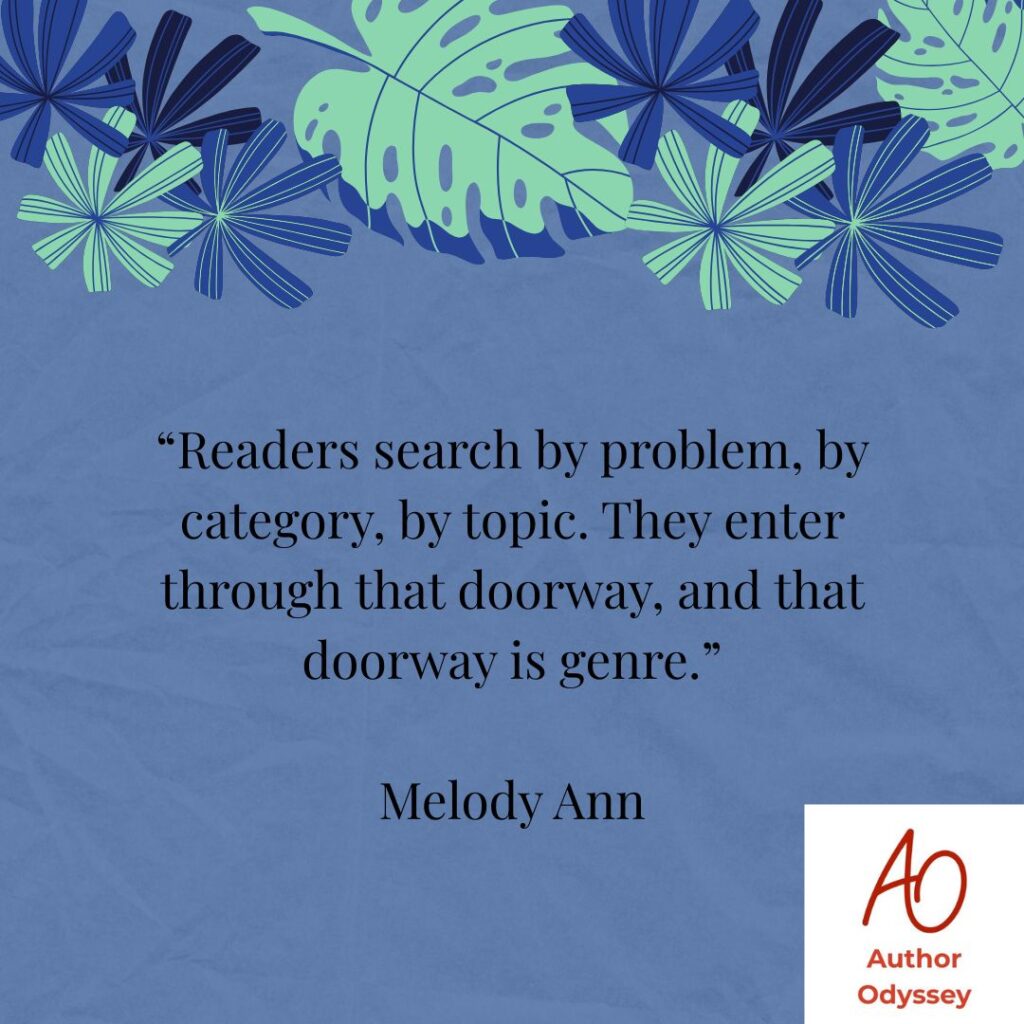
They search by problem, topic, or category, the doorway into that conversation is genre.
Why Your Book Needs a Clear Category
When authors skip genre awareness, something subtle can happen.
They write a book that floats between several categories:
A little business
A little personal development
A little memoir
A little philosophy
Their ideas may be strong and their writing may be excellent, but readers may struggle to answer a simple question:
What kind of book is this?
If readers can’t quickly understand where a book fits, they may not know why they should read it. This doesn’t mean you can’t blend genres. Many successful nonfiction books do exactly that.
For example:
A memoir that teaches life lessons
A leadership book with personal stories
A self-help book grounded in research
Blending genres can be powerful, but to do it well, you must understand the conventions of each genre first.
That’s another reason why your book’s genre matters.
How to Find Where Your Book Belongs
Once you step through what we might call the “genre gateway,” you begin to see the landscape of books around your topic. At this stage, authors often encounter something uncomfortable: other books in their space.
Sometimes many of them and instead of asking, “Why would anyone read my book?” try asking a different question:
What can my book add to this conversation?
Readers don’t usually buy just one book on a topic they care about. They explore multiple voices, perspectives, and approaches.
For example, someone recovering from an injury might read:
A book on physical therapy
A book on mobility
A book on yoga for recovery
A book on the psychology of healing
Each book serves a slightly different need at a different moment in the reader’s journey. Your book doesn’t need to replace every other book. It simply needs to reach the readers who resonate with your voice.
Learning from the “Rival Mirror”
Studying other books in your genre is not about competition, it’s about insight.
Looking at similar books can reveal three valuable things.
1. What readers already love
You’ll notice patterns:
Frameworks readers appreciate
Examples that resonate
Ideas that attract attention
These insights can help you shape your own message.
2. What readers still need
Reader reviews are particularly helpful here. You might see comments like:
“Great information, but I wish there were more practical examples.”
“The science was interesting, but I wanted clearer daily steps.”
These gaps show where your book might serve readers more effectively.
3. What makes your voice unique
No one else has your:
experiences
stories
teaching style
perspective
Your voice is the element that cannot be duplicated. When you look at the landscape with curiosity instead of fear, comparison becomes strategy.
Other Authors Are Not Your Enemies
Another surprising insight many authors discover is this: Other authors in your genre can become allies.
Readers interested in one book on a topic often read several.
For example, as we said earlier, someone exploring recovery might read books about:
physical therapy
mobility training
yoga
mental resilience
Those authors serve the same audience from different angles and instead of competing, authors can collaborate:
recommending each other’s books
appearing on podcasts together
sharing audiences
The nonfiction world thrives on conversations, not competition.
A Simple Exercise for Authors
If you want to clarify How to Find Where Your Book Belongs, try this simple exercise. Imagine walking into a bookstore.
Find the section where your book would live, perhaps:
leadership
personal development
health
business
productivity
Now look at the books already on that shelf and ask yourself three questions:
What are these books doing well?
What questions are readers still asking?
What new perspective does my book bring?
Not better or superior, just new.
Writing Inside a Living Conversation
When you understand your genre and the books around you, something powerful happens. You move from writing in isolation to writing inside a living conversation.
You gain clarity about:
who your book is for
what promise it makes
where it fits in the market
Instead of shrinking your book idea, this awareness strengthens it.
Your message becomes clearer.
Your focus becomes sharper.
Your positioning becomes stronger.
And that clarity helps you make better decisions when writing, publishing, and marketing your book.
Final Thought
If you’ve ever wondered Why Knowing Your Book’s Genre Matters, remember this:
Genre doesn’t limit your creativity.
It helps readers find your voice within the larger conversation.
And when you understand How to Find Where Your Book Belongs, you can write with confidence, knowing exactly where your book fits and the readers it’s meant to reach.
How Implementing The Ideas In This Discussion Can Help You
Implementing the ideas from this episode can help you move from uncertainty to clarity about where your book fits in the marketplace. Instead of writing in isolation and worrying that similar books mean failure, you’ll learn to see the publishing landscape as evidence of reader demand and an opportunity to position your unique voice.
When you understand your genre and study the books already on the shelf, several things begin to happen in your author journey:
Your book becomes easier for readers to find because it fits a recognizable category.
Your message becomes sharper and more focused, which strengthens your writing.
Your marketing and publishing decisions become clearer, because you understand the conversation your book is joining.
You stop seeing other authors as competition and start seeing them as signals, guides, and sometimes collaborators.
Instead of asking, “Why would anyone read my book?” you begin asking the more powerful question: “What does my book add to this conversation?”
3 Quick Actions To Get To Know Your Genre
1. Identify Your Book’s Shelf (3–5 minutes)
Imagine walking into a bookstore or browsing an online retailer. Ask yourself: Which section would my book most naturally sit in?
Write down one main category and one possible subcategory (for example: Personal Development → Burnout Recovery).
2. Look at Three Similar Books (5 minutes)
Search for three books in your category and quickly scan their titles, subtitles, and descriptions. Ask yourself:
What promises do these books make to readers?
What angle or approach do they use?
This helps you understand the conversation your book is entering.
3. Ask the “New Contribution” Question (3 minutes)
Write one sentence answering: “What does my perspective add to this conversation?”
Not better, just different or newly helpful based on your experience, voice, or framework.
These small steps help you move from fear of comparison to strategic awareness, which is exactly what allows your book idea to sharpen and your author journey to move forward with confidence.
Join Author Odyssey to Finish the Project You're Stuck on
Recent Articles
Too Many Book Ideas? Start Here
August 20, 2026
No Comments
If you’re a nonfiction author, having too many book ideas isn’t necessarily a problem. In fact, it often means you have years of experience, research,
Does Your Expertise Belong in a Book? The Best Format for Your Big Idea!
August 13, 2026
No Comments
You have valuable expertise to share, but before you start writing, discover whether your big idea truly belongs in a book—and whether now is the
Do People Keep Telling You to Write a Book?
August 7, 2026
No Comments
Do People Keep Telling You to Write a Book? Discover four practical signs that your expertise may be ready to become a focused nonfiction book