Stuck on Your Book Let’s Fix That Blog

Stuck on Your Book? Let’s Fix That

Author Odyssey Planning Realm Podcast

Stuck on Your Book? Let’s Fix That! 

This episode reveals why capable nonfiction authors stay stuck and how shifting from confusion to structure is the fastest path to finishing your book.

Listen on Your Favorite Podcast Platform

Key Takeaways From Stuck on Your Book? Let's Fix That!

Stuck on Your Book? Let’s Fix That. A New Way to Think About Writing

If you’ve been working on your nonfiction book for years, or quietly avoiding it altogether, you’re not alone.

One of the most common things I hear from brilliant, capable professionals is this: “I’ve been working on this book for years, but I just can’t seem to finish it.”

This blog post (and the work behind it) exists because most nonfiction books never get finished, not because the authors aren’t smart, disciplined, or committed, but because they were never taught how long-form writing actually works.

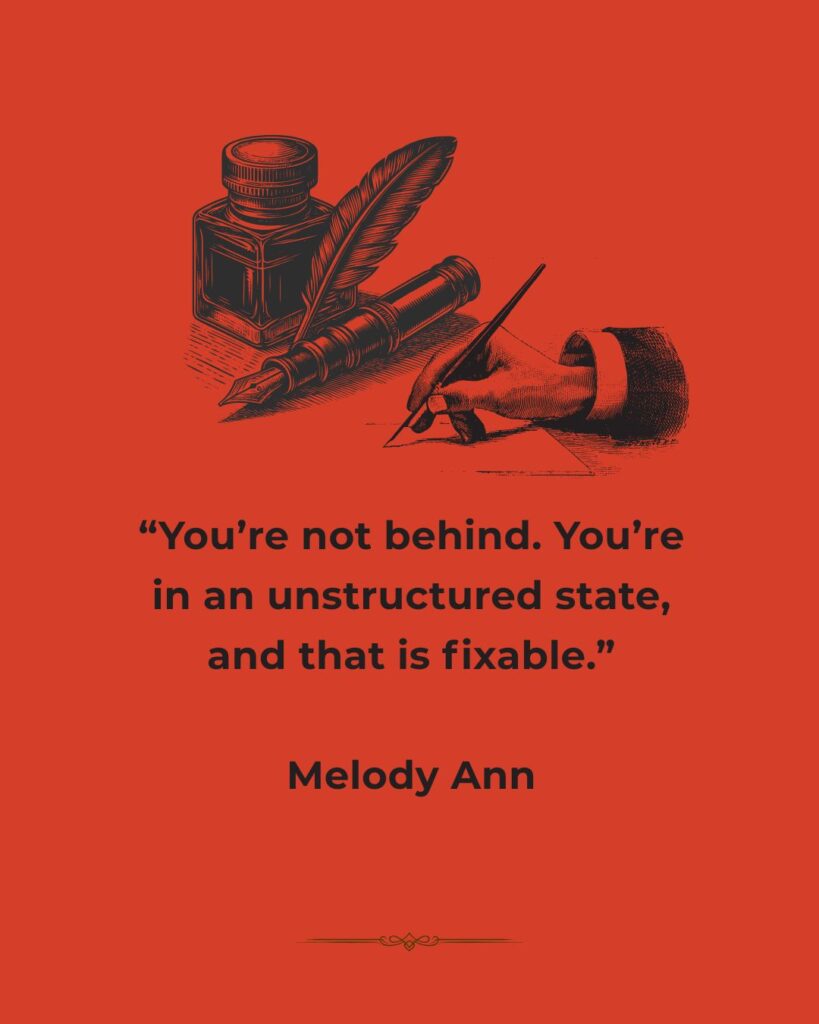
And here’s the good news: If you’re stuck, you’re not broken. You’re unstructured. And that is fixable.

Stuck on Your Book? Let’s Fix That

Why Books Don’t Get Finished

Many authors were taught, explicitly or implicitly, that writing a book means opening a document and starting to type.

But putting words on a page is not the same thing as writing a book.

The writing process starts before the words:

  • Before the chapters.
  • Before the introduction.
  • Before the first sentence.

It starts with thinking, sequencing, and clarity.

When that step is skipped, confusion creeps in. Guilt builds. Perfectionism takes over. And something that could have been playful and meaningful turns into something painful.

This is one of the biggest hidden reasons your book isn’t done yet.

The House-With-No-Blueprint Problem

Imagine building a house without knowing:

  • Who it’s for.
  • How many people will live in it.
  • Whether they can climb stairs.
  • What they actually need.

You could build something, but chances are, it wouldn’t work for anyone.

That’s exactly what happens when nonfiction authors start writing without a plan.

A book without a blueprint often becomes:

  • Inconsistent.
  • Repetitive.
  • Overwhelming (for both writer and reader).
  • Exhausting to revise.

And eventually it gets abandoned.

The Four Real Reasons Nonfiction Books Stay Unfinished

Let’s get specific. Here are four of the most common reasons why books don’t get finished, especially for experts and professionals.

1. No Clear Outcome for the Reader

If you don’t know who the reader becomes by the end of your book, the book has no spine.

Publishing a book is a promise. It tells the reader: “I have something for you.”

That means the reader matters.

A nonfiction book isn’t about dumping information, it’s about guiding transformation:

  • From confusion to clarity.
  • From stuck to capable.
  • From where they are to where they want to be.

When authors say, “I’m just writing it for me,” that’s fine, if you’re not publishing it. But once you publish, the reader must be central.

2. Starting Before Planning

One of the most damaging habits nonfiction authors have is starting with:

  • The introduction.
  • Chapter One.
  • Or “whatever feels right today”

This feels productive, but it often leads to:

  • Endless rewrites.
  • Structural inconsistencies.
  • Feeling stuck halfway through.

Starting without a blueprint is backwards.

Ironically, planning first is what allows you to write faster later.

3. Expertise Without Narrative Skill

Being brilliant does not automatically mean you know how to write a book people want to read.

Experts often:

  • Overwhelm readers.
  • Information-dump.
  • Try to include everything they know.

Readers don’t want your PhD thesis. They want your wisdom translated into something they can digest, engage with, and apply. This is another major hidden reason your book isn’t done yet, and why support, structure, and planning matter.

4. Progress Without Milestones

Writing a book is a long journey and without milestones, authors don’t know:

  • How far they’ve come.
  • How far they still need to go.
  • Whether they’re making progress at all.

And when progress can’t be seen, motivation collapses.

Milestones create:

  • Feedback loops.
  • Momentum.
  • Celebration.
  • Sustainability.

Without them, burnout is almost inevitable.

From Overwhelm to Momentum: A Simple Shift

One of the most powerful shifts you can make is this: Know what you’re writing before you write it.

Here’s a simple exercise to start rebuilding structure-based thinking:

  • What is your book really about, in one sentence?
  • Who does the reader become by the end of the book?

You don’t need perfection. You need direction.

Once you have that, decisions become easier:

  • What belongs in the book.
  • What doesn’t.
  • What comes first.
  • What comes next.

This is how stuck turns into momentum.

Stuck on Your Book? Let’s Fix That. Together

If you’re overwhelmed, frustrated, or quietly thinking about giving up on your book, hear this clearly:

You are not behind, you are not failing. You are in an unstructured state.

And that, my friend, is fixable.

Over the coming weeks, we’ll continue unpacking the obstacles that stall nonfiction authors, including the fog of confusion that makes even the next step feel invisible.

Because finishing a book isn’t about grinding harder. It’s about removing confusion, building structure, and making the journey sustainable, and even enjoyable.

Stuck on Your Book? Let’s Fix That.

You don’t need more pressure.
You need a better plan.

Keep an eye out for our next episode!

Recent Articles

Leave a Comment

Before you Go...